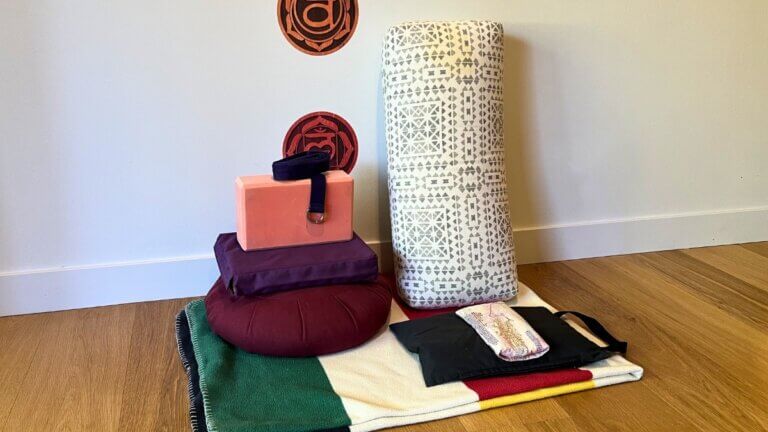
8 Yoga Props That Transform Your Yin Practice
8 Yoga Props That Transform Your Yin Practice
Most yoga props are marketed like accessories, but in yin practice, they’re the foundation of the entire method.
You can’t force fascia to release. You can’t rush compression. And without the right support, your muscles kick in to protect joints, which completely defeats the purpose of holding passive poses for three to five minutes. That’s where props come in. They do the work your body can’t sustain on its own.
The difference between struggling through a yin hold and genuinely settling into one often comes down to having the right tool in the right place. Props let you shift weight, adjust angles, and remove strain so your nervous system can stop guarding and start opening.
Here are the eight props that turn yin from uncomfortable to transformative.
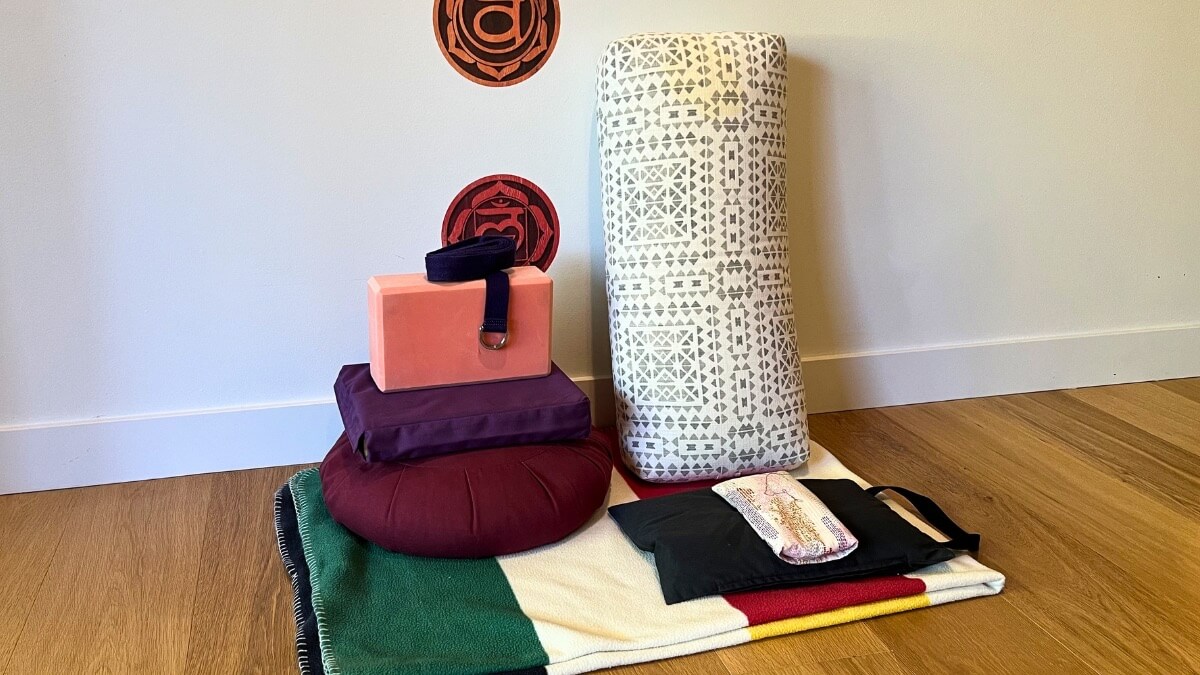
Foundational Support Props
These are the weight-bearing workhorses that let you relax into long holds without your muscles compensating.
1. Bolster
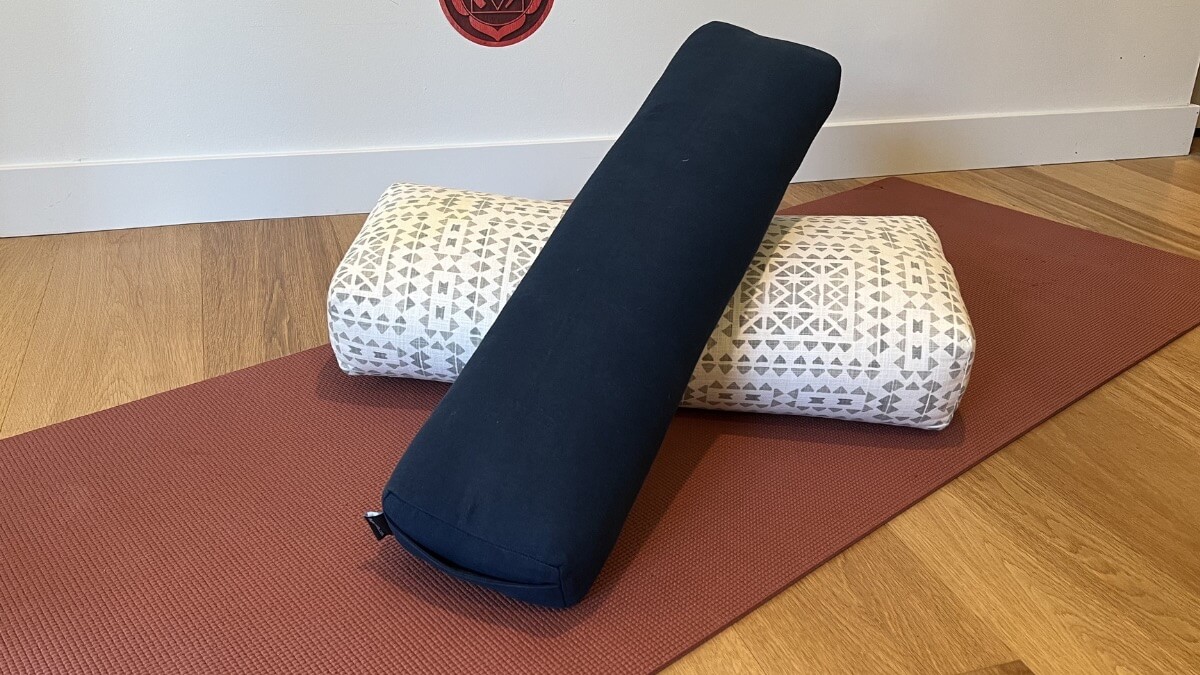
A bolster is the single most versatile prop in yin yoga, and if you only buy one thing, this is it.
Why it works: Long passive holds require your torso to be fully supported so your hip flexors, lower back, and shoulders can stop gripping. A firm rectangular bolster provides stable elevation for reclined poses, forward folds, and gentle backbends without collapsing under sustained pressure.
Most students try to use stacked blankets instead, but they compress unevenly and shift mid-pose, forcing you to re-engage muscles to stabilize. A proper bolster holds its shape for the entire five-minute hold, which is the bare minimum for fascia to begin responding.
Best uses in yin:
Supported Child’s Pose — Place it lengthwise under your torso to open the hips without straining the knees or lower back.Reclined Butterfly — Lie it along your spine to create a gentle chest opener while the hips release.Caterpillar Pose (forward fold) — Rest your chest on it when hamstrings are too tight to fold deeply without rounding the spine.Supported Fish Pose — Position it across your mid-back to passively open the thoracic spine and shoulders.
The goal is to remove effort, and a bolster does that better than any other prop.
What to look for: Choose a rectangular bolster over a round one for yin. Rectangular shapes provide a flat, stable surface that supports the torso and elevates the legs. Go with firm density, the kind that barely gives when you press into it. Soft bolsters feel nice initially, but bottom out under body weight during long holds.
Avoid the mistake: Don’t use a meditation cushion or a couch pillow as a substitute. They lack the structural integrity needed to support your weight for minutes at a time without collapsing or shifting.
A bolster isn’t optional in yin. It’s the baseline tool that makes passive holding actually passive.
2. Yoga Blocks
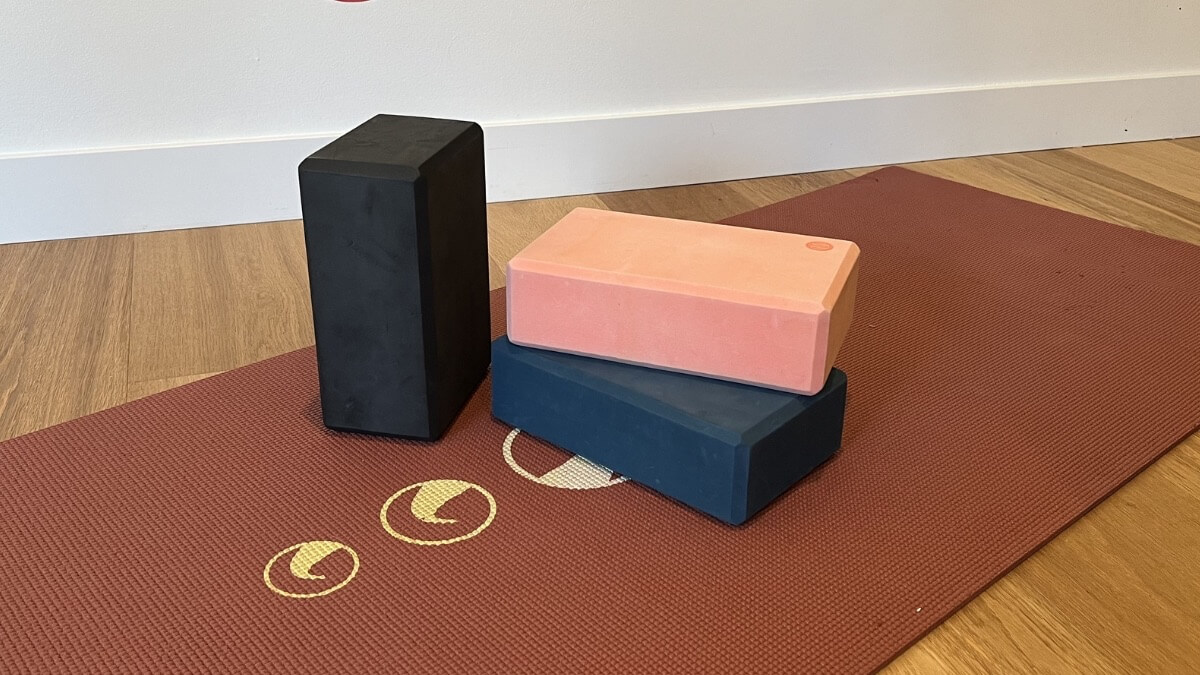
Blocks are the adjustable foundation that let you meet the ground where your body actually is, not where you wish it would be.
The leverage shift: In active yoga, blocks bring the floor closer when you can’t reach. In Yin, they do the opposite—they create the precise amount of space needed to remove muscular effort while maintaining alignment. That distinction matters because Yin is about finding the edge where you feel sensation without strain, and blocks give you millimeter-level control.
When your hips won’t fold all the way to the floor in a seated twist, a block under your sit bone levels your pelvis so your spine can rotate without your hip flexors fighting to hold you upright. When your head hangs in a forward fold, a block under your forehead stops your neck from working and lets your hamstrings actually release.
Essential yin applications:
Supported Squat — Slide a block under your heels if ankle mobility limits your depth, shifting the load to your hips instead of your calves.Sphinx Pose — Place blocks under your forearms to adjust the intensity of the backbend based on shoulder and lower back openness.Sleeping Swan (pigeon variation) — Tuck a block under the hip of your bent leg to reduce the angle and prevent knee torque when hips are tight.Banana Pose (side lying crescent) — Use one under your head for neck support during the long lateral hold.
The beauty of blocks is their three height options. Flip them to low, medium, or high depending on what your body needs that day.
Material matters: Foam blocks are lighter and softer, making them comfortable under bony areas like the sacrum or the head. Cork blocks are denser and more stable, making them better for weight-bearing support, such as under the hips or hands. For Yin, having at least one of each gives you flexibility. If you’re choosing just one type, go cork—they won’t compress or tip during long holds.
How many do you need? Start with two. Many yin poses require bilateral support, and having a pair lets you create symmetrical foundations under both hips, both knees, or under your back and head simultaneously.
Blocks aren’t about making poses easier. They’re about making them sustainable long enough for the fascia to respond.
3. Chip Foam Block
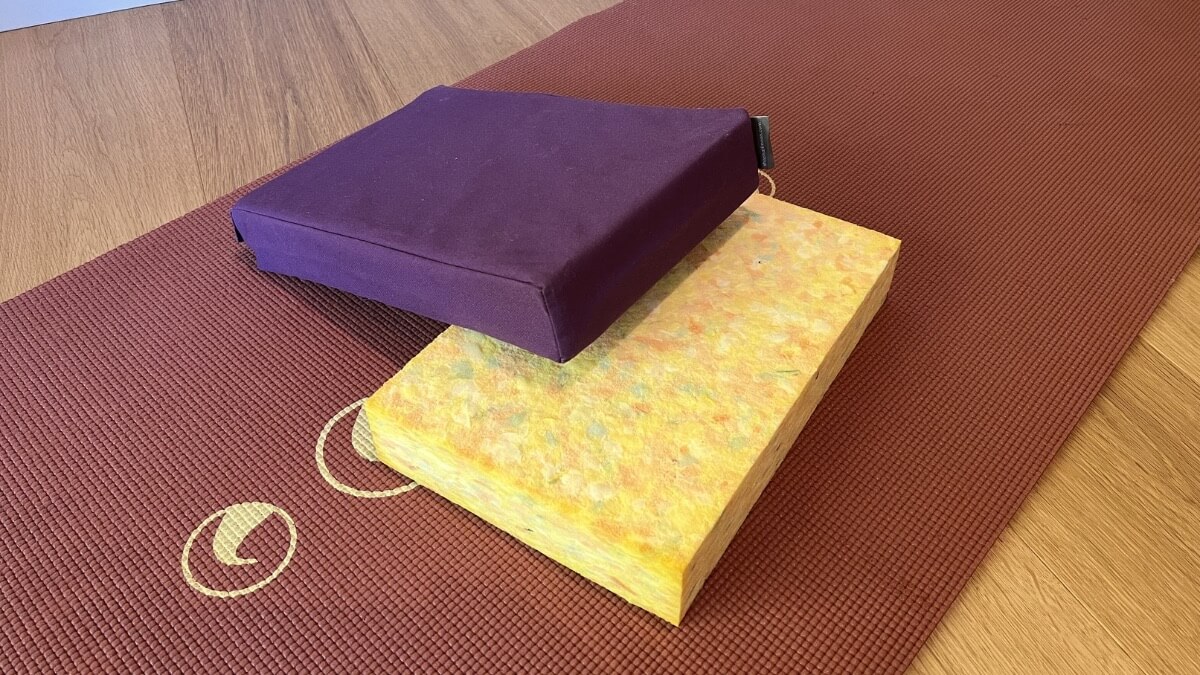
A chip foam block is softer and more forgiving than standard foam or cork blocks, making it the ideal choice for supporting sensitive areas during long yin holds.
Why chip foam is different: Unlike solid foam blocks that have uniform density, chip foam blocks are made from shredded foam pieces compressed together. This construction gives the chip foam block a yielding quality that molds slightly to your body while still providing structural support. When you’re holding a pose for five minutes with a block under your sacrum, head, or knees, that extra give prevents the sharp pressure points that can distract you from the deeper work.
In yin, comfort isn’t about luxury—it’s about removing anything that keeps your nervous system on alert. A chip foam block delivers enough support to maintain alignment without creating the hard surface contact that triggers protective tension.
Best yin applications:
Supported Bridge — Place it under your sacrum for a gentle passive backbend that opens the hip flexors without the hardness of cork digging into your lower back.Reclined Twist — Position it under your shoulder blade on the side you’re twisting away from to deepen the stretch through the chest and shoulders.Legs Up the Wall variation — Slide it under your hips to elevate your pelvis and increase the restorative drainage effect without discomfort.Supported Savasana — Use it under your knees to take pressure off your lower back and allow your entire posterior chain to release into the floor.
The chip foam block sits between a bolster and a standard block in firmness, filling a gap that many yin practitioners don’t realize exists until they try one.
What to look for: Chip foam blocks are typically slightly larger and thinner than standard blocks and, without a cover, have a more textured surface. Look for ones that compress when you press firmly but spring back to shape when released. Avoid blocks that feel too soft or pillow-like—they should still provide stable support, just with more cushioning than solid materials.
When to choose chip foam over cork or solid foam: If you’re holding a block under a bony area like your sacrum, thoracic spine, or the back of your head for more than 2 minutes, chip foam helps prevent the achiness that can develop with harder surfaces. For weight-bearing support under hands or feet where you need maximum stability, stick with cork.
A chip foam block expands what’s comfortable to hold for the time it takes fascia to respond.
4. Blankets
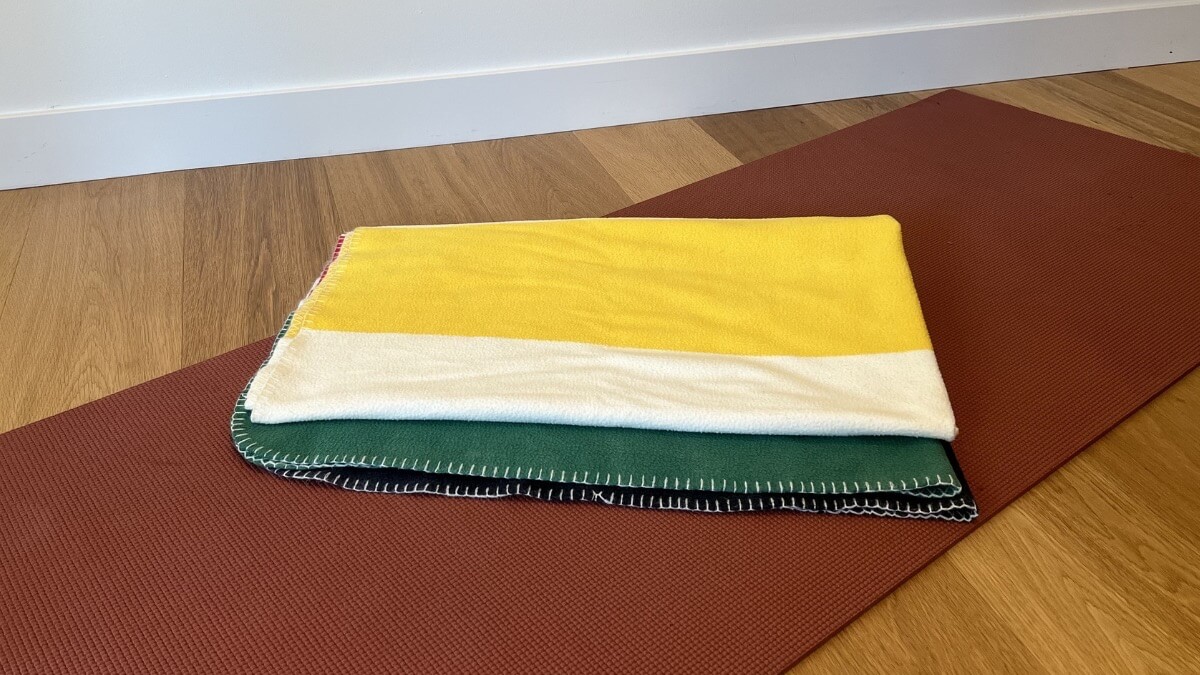
Blankets are the fine-tuning layer that turns uncomfortable pressure points into supported holds you can actually settle into.
Why blankets belong in every yin setup: Even with a bolster and blocks, your body has curves, joints, and bony protrusions that create hot spots of discomfort during long passive holds. A thin layer of padding in the right place—under your knees, ankles, or sacrum—eliminates the low-grade pain that keeps your nervous system on alert and prevents true release.
Yin is not about toughing it out. If your kneecap is grinding into the floor in Child’s Pose, your body will never stop bracing. A folded blanket removes that distraction so you can hold the pose long enough for the hip and lower back fascia to shift.
Strategic blanket placements:
Under the knees — Rolled or folded to fill the gap behind the knee joint in Supported Bridge, Reclined Twist, or any supine pose where your legs are bent.Under the ankles — A small roll tucked beneath the ankle bones in prone poses like Sphinx or Seal prevents the tops of your feet from jamming into the floor.Under the hips — Folded flat to create a slight lift in seated forward folds, which tilts the pelvis forward and reduces hamstring strain.Behind the neck — Rolled thin to support the cervical curve in Savasana or any long supine hold, preventing neck flattening and tension.
The goal is to layer support until nothing in your body is working to hold you up.
Choosing the right blankets: Mexican-style yoga blankets with a tight weave and medium weight are ideal. They fold cleanly without bunching, roll without unraveling, and provide enough cushion without being too soft. Avoid fleece or overly thick blankets—they compress unevenly and shift during holds.
How many to have: Three blankets give you enough range to create multiple support zones in a single pose—one under the hips, one under the knees, one under the head—without running out mid-setup.
Blankets are the difference between “I can tolerate this” and “I could stay here for ten minutes.” In yin, that difference is everything.
Deepening and Refining Props
Once your foundation is stable, these props let you explore greater range, longer holds, and more specific targets.
5. Yin Yoga Sandbag
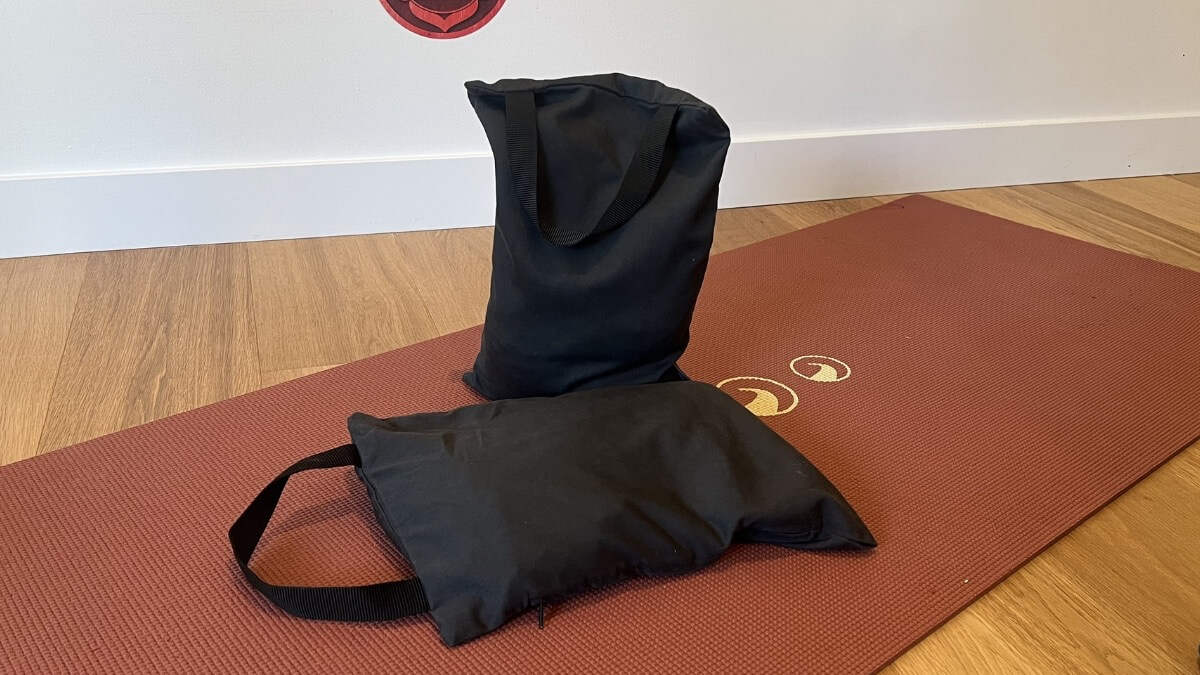
A sandbag adds gentle, sustained weight that encourages passive release in ways your own effort never could.
The weight advantage: Active stretching uses muscular force to push into range. Yin uses time and gravity. A sandbag amplifies gravity’s effect by adding 5 to 10 pounds of consistent downward pressure on specific areas, which signals your nervous system that it’s safe to let go because nothing is pulling or forcing.
Lying a sandbag across your thighs in Butterfly Pose doesn’t push your knees toward the floor—it creates a slow, steady invitation for your hip adductors to stop gripping. The weight is distributed evenly, non-aggressively, and patiently, which is exactly how yin works.
Where sandbags shine:
Reclined Butterfly — Draped across the inner thighs to deepen hip opening without active pressing.Child’s Pose — Placed on your lower back to anchor your hips toward your heels and increase sacral release.Savasana — Rest on your belly or chest to ground your breath and calm the nervous system.Supine Twist — Lie on your top knee to encourage spinal rotation without forcing it.
The sensation is subtle but accumulative. After three minutes under a sandbag, your body yields in ways it won’t with stretching alone.
What to look for: Choose a sandbag designed specifically for yoga, with a removable, washable outer fabric cover. The weight should be between 8 and 12 pounds—heavy enough to create traction but not so heavy as to trigger a protective response. Rectangular shapes distribute weight more evenly than square ones.
Storage tip: Keep your sandbag in a dry spot and avoid leaving it on your mat for long periods, as the weight can create permanent indentations in foam or PVC surfaces.
A sandbag is optional, but once you feel what it does to a hip opener or forward fold, it becomes indispensable.
6. Yoga Strap
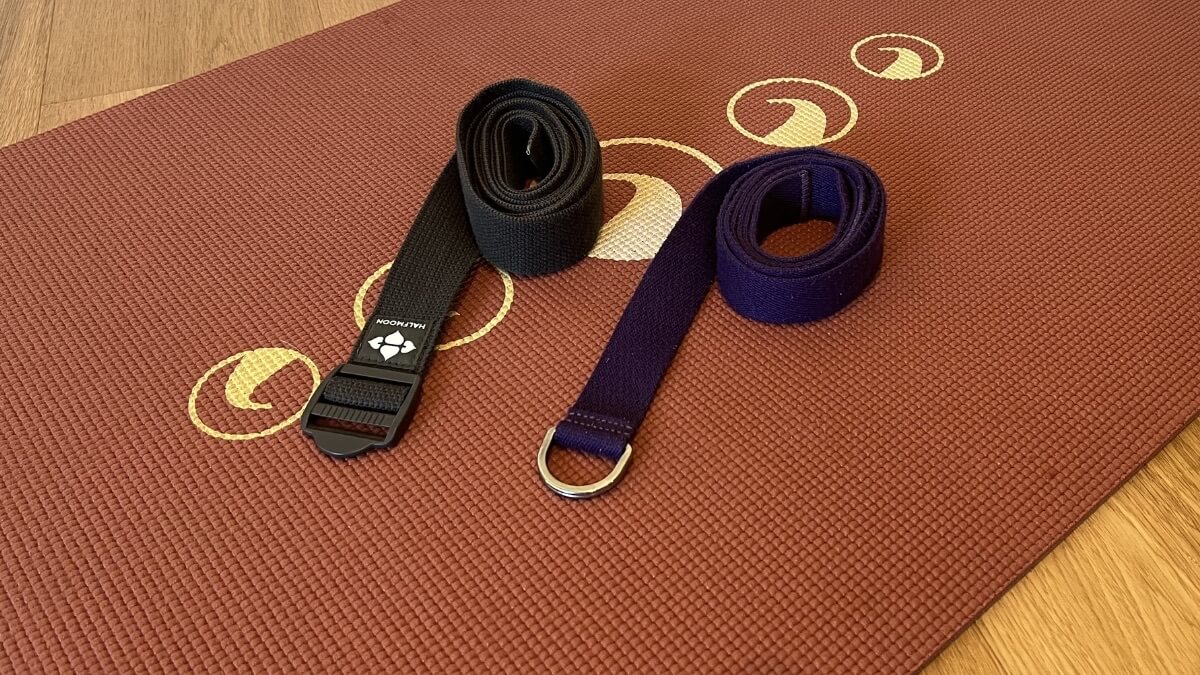
A strap extends your reach and holds positions your muscles can’t sustain, which is critical in yin when you need to maintain a shape for minutes without active effort.
How straps change the game: Flexibility in yin isn’t about touching your toes. It’s about holding a gentle load on your connective tissue long enough for it to adapt. If your hamstrings are tight and you’re white-knuckling a forward fold to keep your hands on your shins, your muscles are doing all the work, and your fascia isn’t getting the time under tension it needs.
A strap lets you loop it around your feet and hold the ends, transferring the work from your grip and core to the strap itself. You relax. The strap holds. Your hamstrings finally get the sustained lengthening stimulus that creates change.
Best strap applications in yin:
Reclined Hand to Big Toe — Loop the strap around your foot and gently guide your leg toward your chest or out to the side without straining your hip flexors or lower back.Seated Forward Fold — Wrap it around the soles of your feet and hold the ends to maintain a forward tilt without rounding your spine.Supine Shoulder Stretch — Hold the strap behind your back with both hands to open the chest and shoulders without active pulling.Bound Ankle Pose (Butterfly) — Loop the strap around your lower back and under your feet to create a supported forward fold over your legs.
The strap doesn’t pull you deeper. It holds you exactly where you are so that time can do the rest.
Strap specs: Get a strap at least 8 feet long with a D-ring or cinch-buckle closure. Cotton straps are softer and more comfortable to hold during long passive stretches. Nylon straps are more durable and less likely to stretch over time, but they can dig into the skin when tension is high.
Adjustment tip: Set the loop before you settle into the pose. Trying to adjust a strap mid-hold breaks the passive state and re-engages muscles you’re trying to release.
A strap is the tool that makes inaccessible poses accessible and sustainable poses truly passive.
7. Eye Pillow
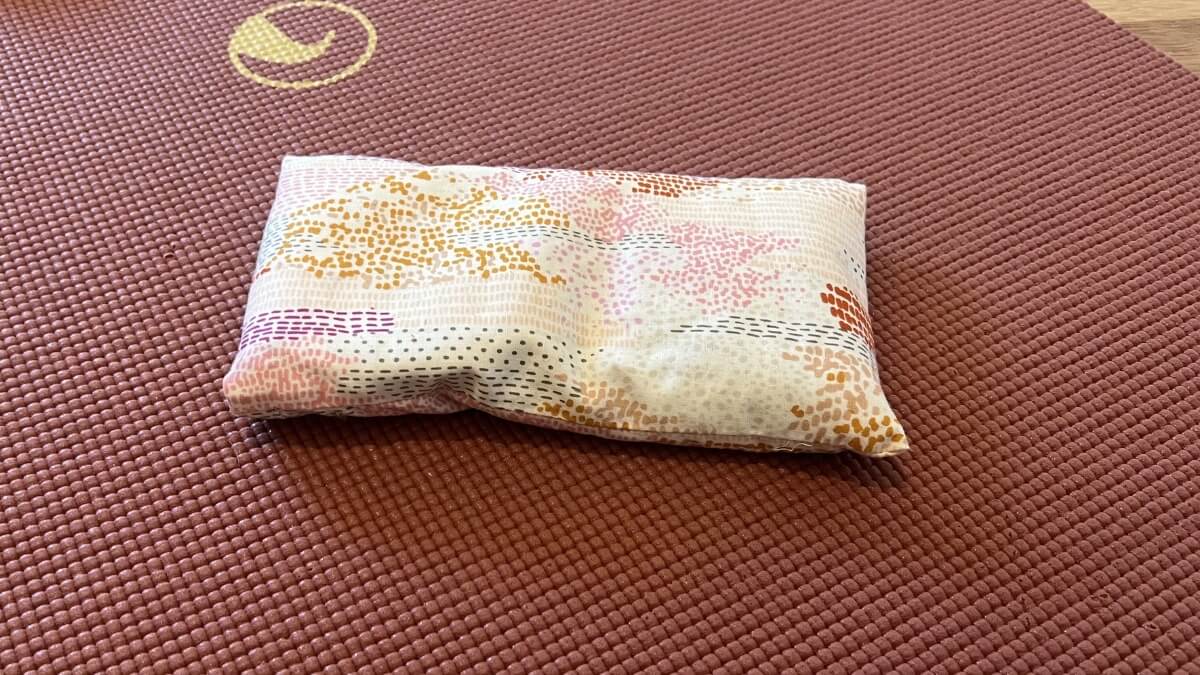
An eye pillow seems like a luxury until you realize how much tension you hold in your face, and how much that tension prevents full-body release.
The sensory shutdown effect: Yin requires your nervous system to shift from the sympathetic (alert, active) to the parasympathetic (rest, restore) state. Visual input keeps your brain engaged. Even with your eyes closed, ambient light filtering through your eyelids signals your brain to stay partially active.
An eye pillow blocks all light and applies gentle pressure across your eye sockets, forehead, and sinuses, triggering a parasympathetic response. The weight is calming. The darkness is absolute. Your jaw softens. Your breath deepens. Your entire system downshifts.
When to use it:
Savasana — Every single time, no exceptions. It’s the difference between lying down and actually integrating the practice.Supported Child’s Pose — If your head is resting on a bolster and you’re holding for five minutes, an eye pillow deepens the restorative quality.Reclined Butterfly or Supported Fish — Any supine pose where your face is pointing up, and you’re meant to be passive, not observing.Legs Up the Wall — Covering your eyes amplifies the calming, blood-pressure-lowering effects of inversion.
The goal isn’t relaxation for its own sake. It’s creating the internal conditions where fascia can release, and that only happens when your nervous system isn’t on guard.
What makes a good eye pillow: Look for one filled with flaxseed or lavender, which molds to the contours of your face and provides even weight distribution. Avoid overly heavy pillows—4 to 8 ounces is ideal. The cover should be removable and washable, preferably silk or soft cotton.
Temperature variation: Some eye pillows can be heated in the microwave or chilled in the freezer. Warmth can soothe sinus tension and headaches. Cold can reduce puffiness and provide a sharper sensory contrast that some people find grounding.
An eye pillow costs less than a yoga class and transforms the quality of every long hold.
8. Meditation Cushion (Zafu)
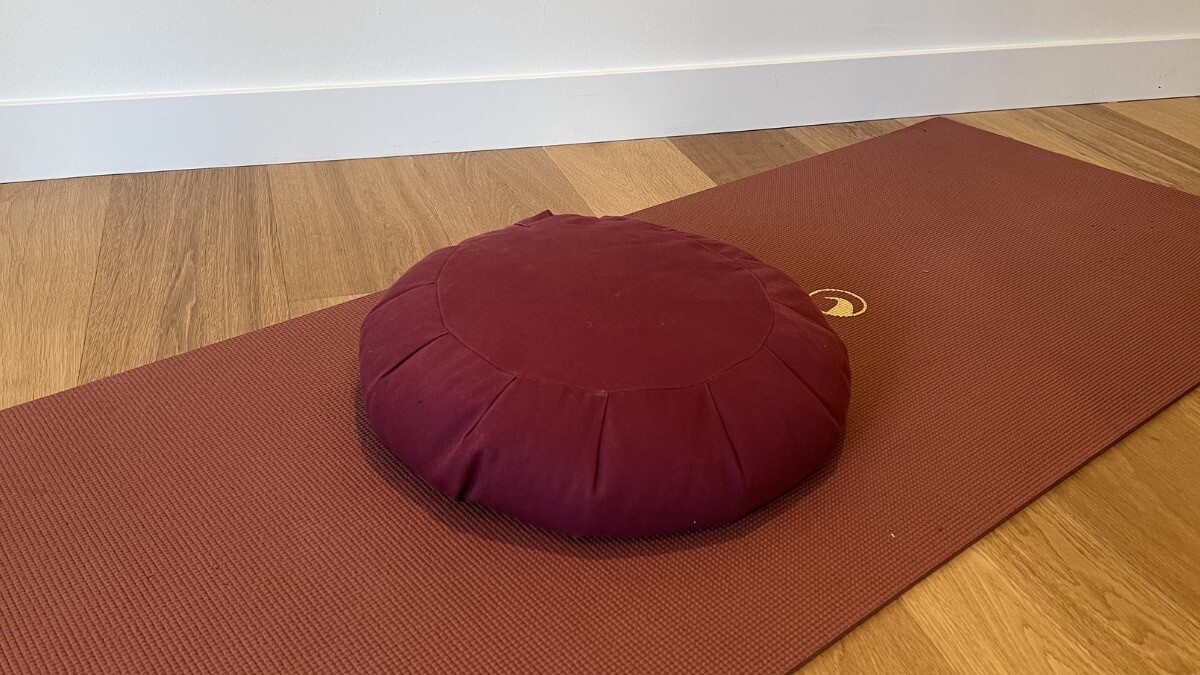
A zafu isn’t just for seated meditation—it’s the tool that makes floor-based yin poses sustainable when hip mobility is limited.
The pelvic tilt principle: Most yin sequences include seated poses like Shoelace, Caterpillar, or Dragonfly. If your hips are tight, sitting flat on the floor tilts your pelvis backward, which rounds your lumbar spine and puts your hamstrings on high alert. Your body immediately goes into protection mode, and no amount of time in the pose will create release.
A zafu elevates your hips by 4 to 6 inches, tilting your pelvis forward into a neutral position. Your spine can stack naturally. Your hamstrings relax. Suddenly, you can hold a seated forward fold for five minutes without your lower back screaming.
Where a zafu transforms the practice:
Shoelace Pose (seated hip stretch) — Sitting on a zafu reduces knee strain and allows your hips to externally rotate without lumbar compensation.Caterpillar (seated forward fold) — Elevating the hips tilts the pelvis forward so you can fold from the hips instead of rounding the spine.Dragonfly (wide-legged forward fold) — The lift creates space for the pelvis to tilt, making the pose accessible even with tight adductors.Child’s Pose — Sitting your hips back onto a zafu between your heels reduces knee compression and allows a deeper hip release.
The cushion doesn’t make the pose easier. It makes it anatomically possible.
Zafu vs. block: You can use a block under your hips for seated poses, but a zafu is softer and more comfortable for long holds. Blocks create pressure points on the sit bones that become uncomfortable after a few minutes. Zafus distribute weight evenly and conform slightly to your body.
What to choose: Traditional round zafus work well, but crescent-shaped zafus (also called cosmic cushions) are even better for yin because they cradle your thighs and provide slightly more forward tilt. Look for one made from buckwheat hulls, which mold to your shape and don’t flatten over time.
A zafu is the single best investment for anyone with tight hips who wants to stop fighting seated poses.
Yin yoga without props is like trying to meditate in a room with strobe lights. You might get through it, but you’ll never settle deeply enough to access the real transformation. Props aren’t about making things easier—they’re about making the method work the way it’s designed to. When your body is fully supported, your nervous system stops defending, and that’s when fascia finally starts to shift. These eight tools are the bridge between effort and release, between holding a pose and truly inhabiting it.
If you’re serious about yin, start with a bolster, two blocks, and a blanket. Add from there based on what your body needs most. Every prop you bring into your practice expands what’s possible in a hold, and in yin, time under tension is the only thing that creates change.
Practice Yin Yoga with us
Join Bernie Clark and Diana Batts for their weekly live online Yin Yoga Classes, or practice with their recordings. Available in the Welcome to the Yinside Subscription.
Kevin Parenteau
He is a long-time Ashtanga and Yin Yoga Practitioner. Vipassana Meditator, Yoga teacher,
And all-around Yoga Nerd.
Writes on Yoga Asana Practice, Meditation, Chakras, Yoga Education and Philosophy
You Love Yoga, We Love Yoga—Let’s Stay Connected
Get yoga tips, a little inspiration, and friendly emails—because yoga is better with friends.
No spam. No selling your data. Ever.
The post 8 Yoga Props That Transform Your Yin Practice Written By Kevin Parenteau appeared first on Asana at Home Online Yoga Inc..
Leave a Reply Cancel reply
Recent Comments
Archives
- September 2026
- August 2026
- July 2026
- June 2026
- May 2026
- April 2026
- March 2026
- February 2026
- January 2026
- December 2025
- November 2025
- October 2025
- September 2025
- August 2025
- July 2025
- June 2025
- May 2025
- April 2025
- March 2025
- February 2025
- January 2025
- December 2024
- November 2024
- October 2024
- September 2024
- August 2024
- July 2024
- June 2024
- May 2024
- April 2024
- March 2024
- February 2024
- January 2024
- December 2023
- November 2023
- October 2023
- September 2023
- August 2023
- July 2023
- May 2023
- March 2023
- February 2023
- August 2022
- July 2022
- June 2022
- May 2022
- April 2022
- March 2022
- February 2022
- January 2022
- December 2021
- November 2021
- October 2021
- September 2021
- August 2021
- July 2021
- June 2021
- May 2021
- April 2021
- March 2021
- April 2020
- March 2020
- February 2020
- January 2020
Theme by The WP Club . Proudly powered by WordPress