Yoga for Menopause: When Your Practice Starts to Shift
Yoga for Menopause: When Your Practice Starts to Shift
For most of my adult life, my body followed a predictable rhythm — a cycle I came to understand deeply through years of consistent yoga practice.
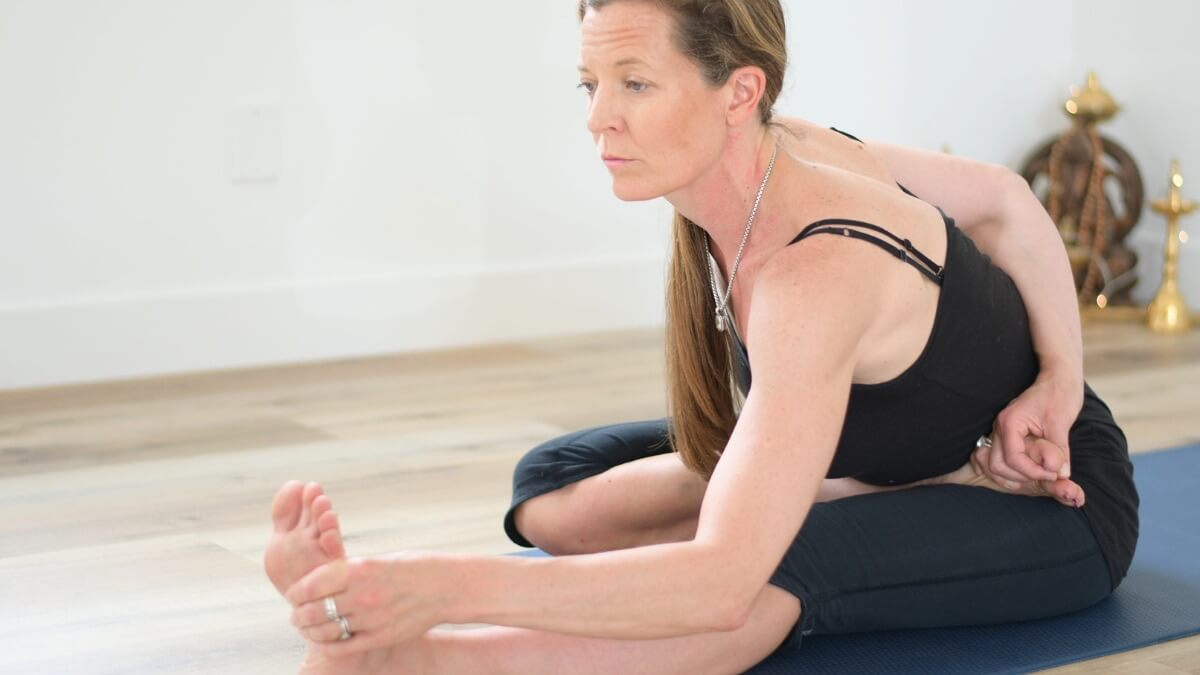
I’ve been practicing Ashtanga yoga for decades, and for much of that time, teaching has been a central part of my life. Practice wasn’t something I visited occasionally — it was something I returned to almost daily. Over time, that consistency gave me a sensitivity to subtle changes in my body and mind that I might not have noticed otherwise.
For around 35 years, my cycle followed a familiar pattern every 28 days… give or take.
Key Takeaways
Learning the Pattern of My Body
When I was 15 and menstruation finally arrived, it was very welcome. I was the youngest and the last of my girlfriends for my menstruation to arrive, so there was definitely a sense of relief when my first period came.
Most of my periods were manageable without too many symptoms. It was pretty much clockwork until my working-on-Wall-Street era, when my period stopped completely. This was directly connected to higher-than-normal stress levels.
That wake-up call started a deeper awareness of my cycle. I began to see my monthly rhythm as a reflection of how I was living my life. Menstruation told me what was happening in my life and how I was taking care of myself — or not — on all levels.
On the harder cycles, menstruation could feel limiting. I remember one evening stuck in a hotel in Tofino. We were supposed to be out on kayaks, paddling to an island and camping out. Instead, I was in the bathroom with horrendous cramping, lying on the floor unable to move.
I felt like my body had betrayed me, and I felt weak.
Luckily, the next day I was back to my normal self and able to embark on our kayaking expedition. These extreme symptoms usually happened only once or twice a year, and they were definitely not normal for me. I realized my cycle was symbolic of my overall health and energy levels.
As a young professional woman, not listening to the body was all too easy. From this experience, I learned to be more mindful as I followed my cycle — to listen to my period and, when possible, to give myself rest, space, patience, and forgiveness.
Tracking the Subtle Shifts
This newfound awareness birthed the phase of embracing my power as a woman. I began to welcome the symbolic, rhythmic gift rooted deep in ancient female energy that accompanied my period.
I started tracking my moon cycle. This was years before any apps existed, so I would draw a circle in my journal and divide it into 28 days — or however many I needed for the month. In those changing pie-shaped cutaways, I would jot down feelings and notes.
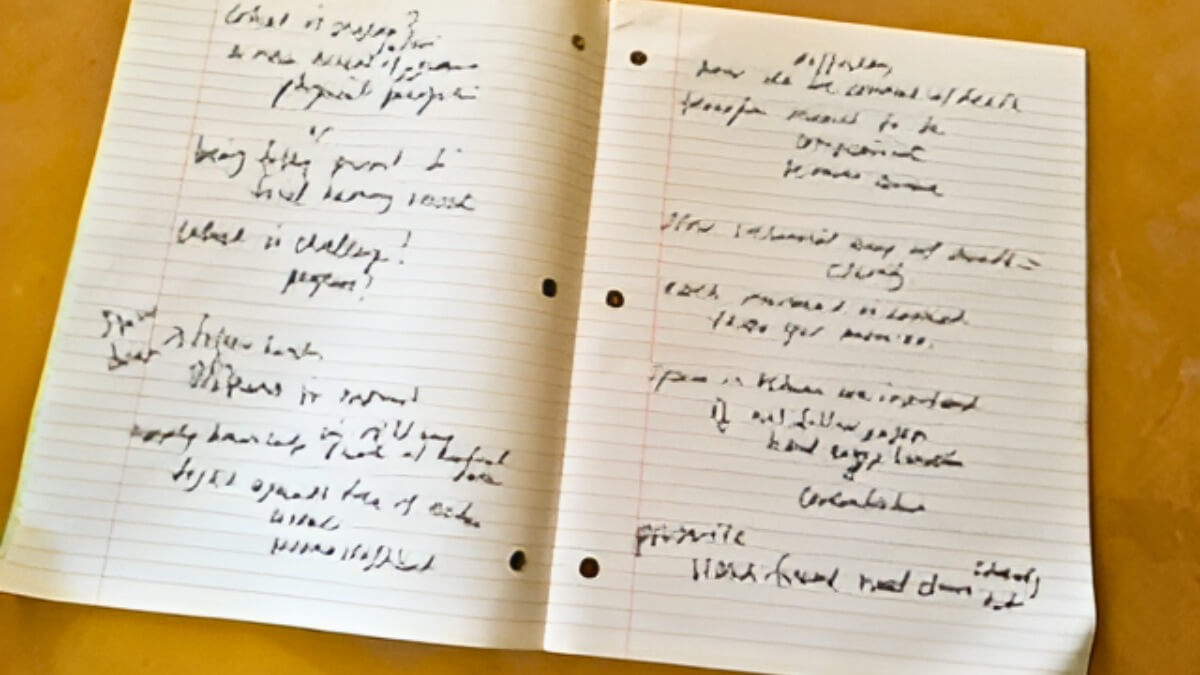
By following my cycle consciously, I was able to see monthly patterns and track how they affected my emotions, physical body, relationships, life, and yoga practice.
I started noticing details. The week after ovulation, for example, I would feel a slight, slight twinge in my lower left back in upward dog. It was subtle and not limiting, but it was there.
The awareness that comes with a dedicated yoga practice helped me notice subtle changes in my body and mind that were harder to feel, notice, and embrace in the pattern of everyday Western life.
I went a step further and began to honour three days of rest at the beginning of my cycle. After this rest, I would slowly add back inversion postures about eight days after my cycle started.
In this phase of life, I became intricately connected with my cycle and my inner self. My practice supported my cycle and my lifestyle, and my lifestyle supported respect for my cycle.
Looking back now, I can see that this shaped me not only as a practitioner, but also as a teacher. I learned to value the quiet information the body gives us before it becomes loud. That has deeply informed how I understand practice: not as something imposed on the body, but as something we learn to listen through.
Pregnancy, Practice, and a New Body
Sixteen years after my cycle began, it changed again with pregnancy.
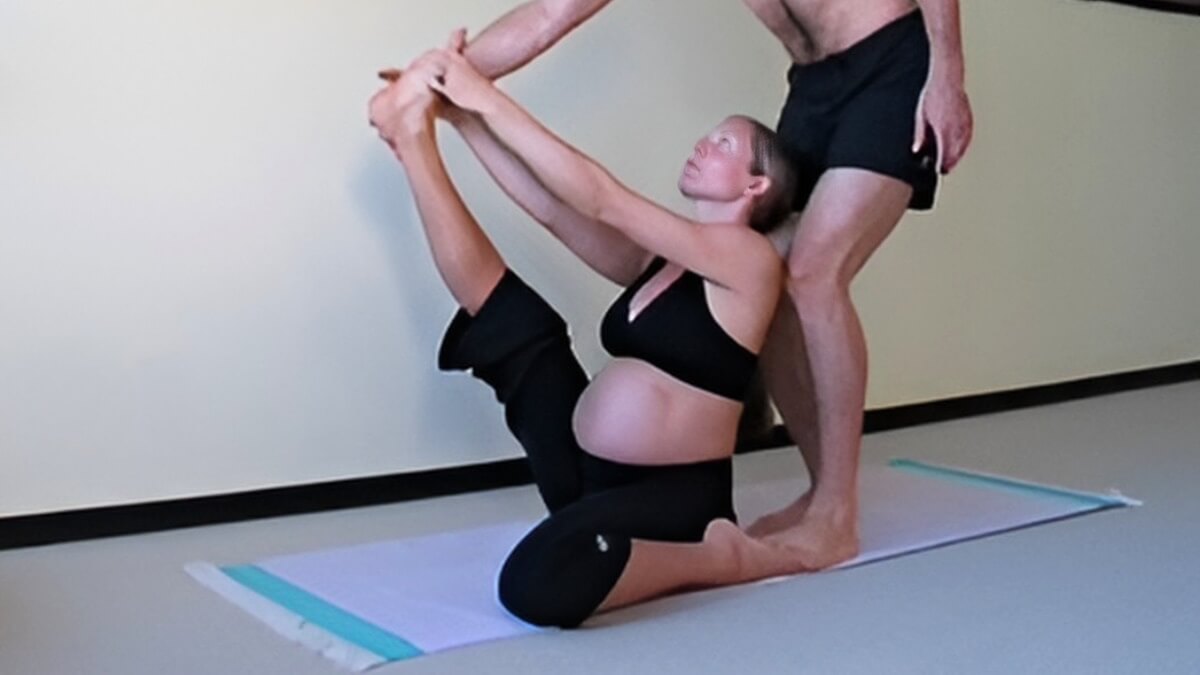
The blood stopped flowing, and the moon-cycle circles with pie-shaped cutouts became typed notes on my laptop documenting the various weeks of pregnancy — how I felt and what I experienced physically and emotionally.
I was an avid note-taker and scientist in that I loved to document and keep track of this new chapter in my life. My yoga practice, once again, shifted to reflect these ebbs and flows: from flat belly with a modified practice to bigger belly with an interesting practice.
Strangely enough, my most modified practices were probably around six to twelve weeks, when my belly was still flat but my body felt foreign and was changing rapidly again for the first time in years.
My core vanished overnight. I had sharp pains in my cervix, which made me worried. I was always hungry, so I started eating before practice, after practice, and while I was teaching.
All of these changes were meticulously recorded in photos and words in various journals and on my laptop.
My period stayed away for the first ten or so months of my son’s life. Then it made an unexpected return on an airplane, in the tiny plane bathroom, with a 10-month-old on the change table.
This was indeed a challenge, but I rose to meet it. I had almost forgotten about that dull throbbing sensation in my lower abdomen and what that symbolized.
At that point, I had birthed a baby boy and I was a strong woman. I handled the arrival of my period with paper towels, a bit of humour, and some grace.
I think there was only that one period before I found myself pregnant again with my second child.
Motherhood and the Practice of Midline
The flexibility of being a mother, a householder, and running a yoga studio was demanding, but it gave me purpose and strength.
Yoga became a practice of listening.
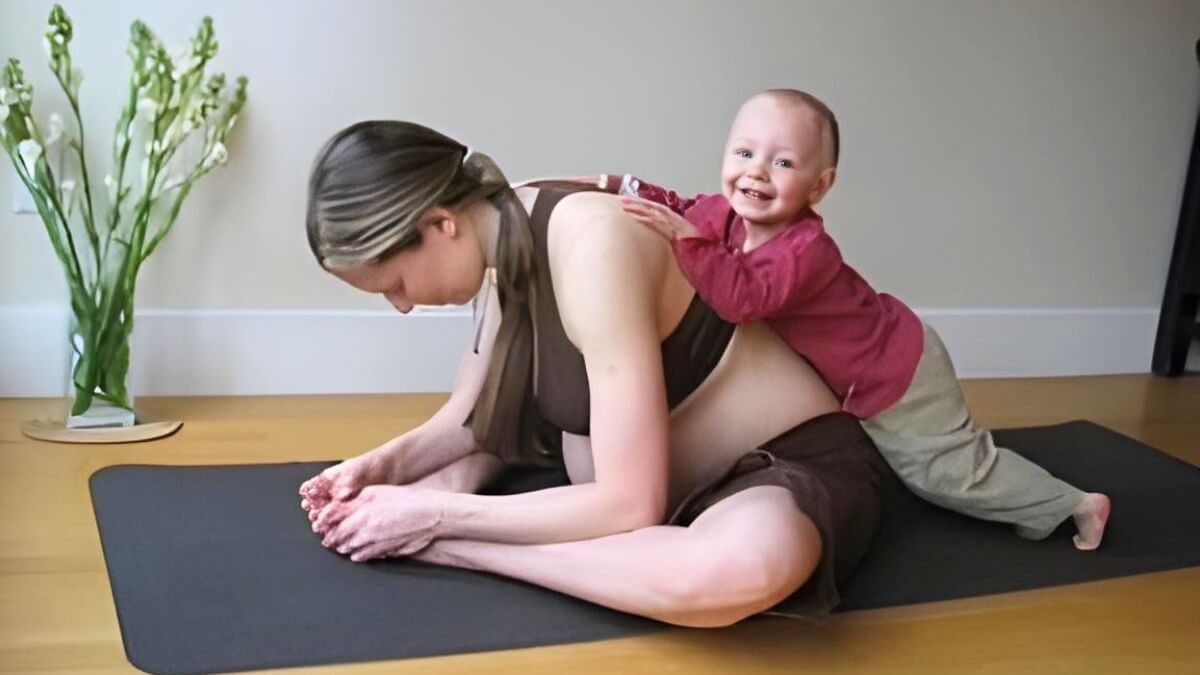
During this period, the practice was essential — a tether for my soul and a way to keep my body, but really my mind, as midline as possible.
I love the term midline.
There were days when I would arrive at my mat flustered. Perhaps the school drop-off that morning was extra tantrumy. As soon as I tapped into the breath, my mind would step back. I could feel my body soften and release, and there was a stillness.
I called this being in “midline.”
Practice was now so much more than a physical practice. It was a spiritual practice to keep me in that place of midline — or to remind me when I was not in midline, which happened quite a bit.
As a teacher, this period changed the way I understood consistency. It was no longer only about repeating the same form every day. It was about returning to something steady inside myself, even when life around me was not steady at all.
The Years of Pattern and Flow
My period cycle continued. It brought me through toddlers, young children, and teenagers, and my practice reflected this cycle.
My practice was regular and stable. I would show up on my mat five or six days a week for one to two hours. With children in our lives, flexibility was key, and on weekdays I would practice right after I dropped the kids off at school.
By that point, I had already been up for hours. I would teach yoga in the early hours before my kids were even out of bed. My husband took care of the kids in the morning, and I would return home after teaching, eat breakfast with them, take them to school, and then return to the studio for my time to practice.
I continued to honour my moon cycle and would do restorative, non-asana-based practices during menstruation.
From my mid-thirties onward, I started to notice ovulation more easily because I could feel a bit of subtle cramping. My yoga practice made me aware of subtle body shifts, and I was grateful for receiving the gift of listening, respecting, and honouring these subtle messages and patterns.
These messages would infuse my day, week, and month until the next cycle arrived.
These were the years of pattern and flow — literal flow, if you like.
When the Pattern Began to Change
Somewhere in my mid-forties, that rhythm began to change.
At first, it was subtle. The patterns were still there, but they no longer felt as steady or predictable. Things that had once felt reliable in my body, energy, and practice started to shift in ways I could not quite explain.
I don’t think I fully recognized it at the time. I just knew something felt different.
Looking back, this was the beginning of perimenopause and the gradual dismantling of patterns I had relied on for decades.
This was not a dramatic arrival. It was not a clear line in the sand. It was more like a quiet loosening of something I had trusted for most of my life.
And perhaps that is why it took time to understand.
The practice that had taught me to notice, track, and honour patterns was now asking me to listen in a new way — not to a familiar rhythm, but to a rhythm that was beginning to disappear.
The Beginning of a Different Kind of Listening
This is where the next chapter began.
For years, I had known the general arc of my body. I understood my cycle. I understood how my energy moved. I understood when to rest, when to return, and how practice could support the whole rhythm of my life.
But perimenopause began to change that relationship.
The old maps were still there, but they no longer explained everything.
As a practitioner, this was unsettling. As a teacher, it became humbling. It reminded me that even after decades of practice, the body can still become unfamiliar. It reminded me that listening is not something we master once. It is something we keep learning, especially when the body begins speaking in a new language.
Thus arrived the elusive era of perimenopause.
And with it, the dismantling of patterns I thought I knew.
Fiona Stang
Fiona Stang is the founder of Ashtanga Yoga Vancouver and an Authorized Level 2 Ashtanga yoga teacher. She has practiced and taught Ashtanga yoga for decades, supporting students through a steady, traditional approach while continuing to explore how the practice evolves through different stages of life.
Learn more about Fiona and her teaching at Ashtanga Yoga Vancouver.
You Love Yoga, We Love Yoga—Let’s Stay Connected
Get yoga tips, a little inspiration, and friendly emails—because yoga is better with friends.
No spam. No selling your data. Ever.
The post Yoga for Menopause: When Your Practice Starts to Shift Written By Fiona Stang appeared first on Asana at Home Online Yoga Inc..
Leave a Reply Cancel reply
Recent Comments
Archives
- August 2026
- July 2026
- June 2026
- May 2026
- April 2026
- March 2026
- February 2026
- January 2026
- December 2025
- November 2025
- October 2025
- September 2025
- August 2025
- July 2025
- June 2025
- May 2025
- April 2025
- March 2025
- February 2025
- January 2025
- December 2024
- November 2024
- October 2024
- September 2024
- August 2024
- July 2024
- June 2024
- May 2024
- April 2024
- March 2024
- February 2024
- January 2024
- December 2023
- November 2023
- October 2023
- September 2023
- August 2023
- July 2023
- May 2023
- March 2023
- February 2023
- August 2022
- July 2022
- June 2022
- May 2022
- April 2022
- March 2022
- February 2022
- January 2022
- December 2021
- November 2021
- October 2021
- September 2021
- August 2021
- July 2021
- June 2021
- May 2021
- April 2021
- March 2021
- February 2020
- January 2020
Theme by The WP Club . Proudly powered by WordPress