Camel Pose (Ustrasana): A Complete Yoga Pose Guide
Camel Pose (Ustrasana): A Complete Guide with Yin Yoga Variations
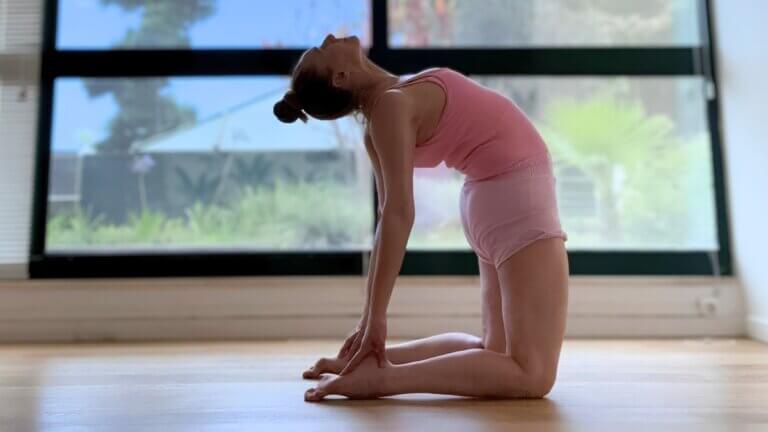
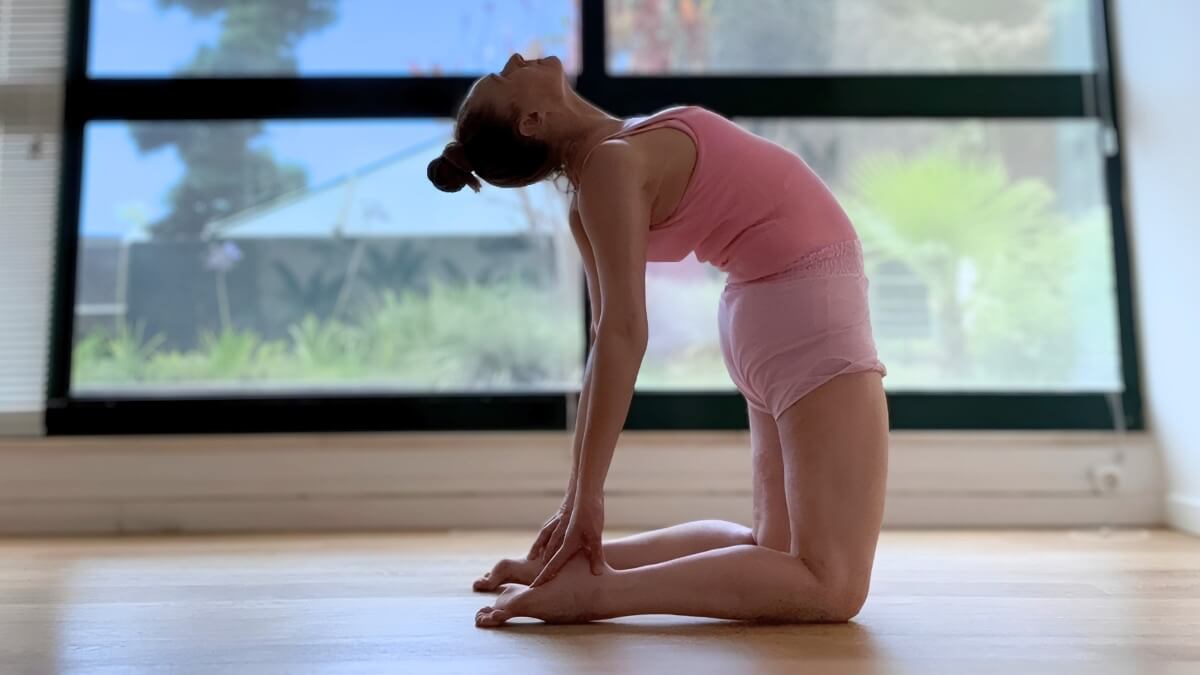
Camel Pose, or Ustrasana, is a kneeling Yoga backbend that opens the chest, shoulders, spine, abdomen, hips, and front thighs. It may be practiced with the hands on the lower back, reaching toward the heels, or with the hands placed on the floor behind the body for support. Traditionally practiced as a more active Yoga posture, Camel can also be adapted with props and support to create a quieter Yin Yoga variation that allows the body to explore the shape with less effort.
Camel Pose (Ustrasana): Overview
Camel Pose is a kneeling backbend in which the thighs stay grounded while the spine moves into extension. In the full version of the pose, the hands may reach back toward the heels while the chest lifts and the front body opens.
The Sanskrit name is Ustrasana. “Ustra” means camel, and “asana” means pose or seat. The pose is practiced in many styles of Yoga, including Hatha, Vinyasa, Ashtanga, and modern postural Yoga classes.
In a traditional Yoga class, Camel Pose is usually active. The legs, hips, back, and core all help support the shape. In a Yin Yoga setting, the pose is often modified with blocks, bolsters, a wall, or a chair so the body can settle into a gentler version of the backbend.
Camel Pose mainly targets the spine, chest, abdomen, hip flexors, quadriceps, shoulders, and front body. Depending on the variation, it can feel like a strong active backbend or a softer supported shape.
How to Do Camel Pose
In Camel Pose, the goal is not to force your hands to your heels or create the deepest possible backbend. Choose a version where your breath stays steady, and your lower back, neck, and knees feel safe.
Benefits of Camel Pose
Camel Pose gives the body a chance to move into a backbend from a stable kneeling position. It can be energizing, spacious, and strengthening when practiced with awareness.
Physical Benefits
Energetic Benefits: Meridians & Chakras
In Yoga, Ustrasana or Camel Pose is often associated with the Heart Chakra because of the chest opening it creates. Some students experience the pose as uplifting, emotional, energizing, or expansive.
From a Yin Yoga perspective, Camel may affect the Stomach and Spleen meridians due to the stretch of the front thighs, abdomen, and front body. Depending on the arm position, it may also involve the Heart and Lung meridians through the chest, shoulders, and arms.
As always, energetic effects are personal. Some students find Camel Pose powerful and opening, while others prefer a smaller, more supported version.
Contraindications & Safety Tips
Camel Pose can be intense and should be approached with care.
Modify or avoid this pose if you have:
Low-back pain or spinal sensitivity: Use a smaller version, keep your hands on your lower back, or choose a supported backbend instead. If the lower back feels pinched or compressed, come out.Neck issues: Keep the neck neutral and avoid dropping the head back.Knee discomfort: Place a folded blanket under the knees, or choose another pose if kneeling is uncomfortable.Shoulder injuries: Keep your hands on your lower back or use blocks instead of reaching for the heels.Hip or thigh sensitivity: Use a smaller backbend and avoid forcing the hips forward.Dizziness or vertigo: Keep the head lifted and avoid moving quickly in or out of the pose.Recent abdominal surgery or pregnancy: Use caution and choose a gentler supported shape if needed.
A good rule for Camel Pose or Ustrasana: lift and lengthen before you backbend. If your breath becomes tight, your lower back feels pinched, your neck feels compressed, or your knees complain, reduce the depth or come out.
Pose Modifications & Variations
Camel Pose can be adjusted by changing the positions of the feet, hands, knees, and spine, as well as the use of props.
Camel Pose with Hands on the Lower Back
The Hands-on-Back version is often the best place to start Ustrasana. Keep your hands on your sacrum or lower back, and focus on lifting your chest rather than reaching for your heels.
This starting version gives you more control and helps you avoid collapsing into the lower back.
Hands-to-Floor Camel Variation
In this variation, the hands come to the floor behind the body rather than reaching for the heels. The knees remain bent, the shins stay on the floor, and the chest lifts as the hips move forward.
This version can make Camel Pose more accessible for students who find it difficult to reach their heels or who prefer more support through the arms. It also allows you to control the depth of the backbend more easily.
To practice it, place your hands behind you with the fingers pointing forward, outward, or slightly back—whichever feels best for your wrists and shoulders. Press into the hands, lift the chest, and allow the front body to open without collapsing into the lower back or neck.
Keep the neck comfortable. You can look forward, slightly upward, or gently back if that feels appropriate.
Hands-to-Floor version can make Camel Pose more accessible
Camel Pose with Toes Tucked
Tucking the toes lifts the heels and makes them easier to reach. This can reduce the intensity of the backbend and make the pose more accessible.
If the tops of the feet or ankles are uncomfortable, this may also feel better than keeping the feet flat.
Camel Pose with Blocks
Place blocks beside your feet or ankles. Instead of reaching all the way to your heels, place your hands on the blocks.
This keeps the Ustrasana backbend smaller and gives the hands something stable to press into.
Read 8 Yoga Props That Support Your Yin Practice to learn more.
Supported Yin Yoga Camel Pose
In a Yin Yoga variation, the body is more supported. You might place a bolster, blocks, or a Yoga chair behind you and let your spine rest into a supported backbend.
This version reduces muscular effort and can make the pose quieter. The shape may be held longer, but only if the support feels steady and the breath remains easy.
Half Camel Pose
Keep one hand on your lower back and reach the other hand toward the heel, block, or floor. This Half Camel (Ardha Ustrasana) variation can be useful if the full version feels too intense or if one shoulder is less mobile.
Switch sides if you want to balance the shape.
Muscles, Joints & Target Areas
Camel Pose primarily engages the spine, front body, hips, thighs, chest, and shoulders.
Primary target areas:
SpineChest and ribsAbdomenFront of the hipsQuadricepsFront shouldersThroat and neck, depending on head position
Common anatomical focus:
Thoracic spineLumbar spineHip flexorsPsoas and iliacusRectus femoris and quadricepsRectus abdominisIntercostal musclesPectoral musclesAnterior shouldersKnees and ankles, depending on the setup
In an active Camel Pose, the body must support the backbend. In a Yin Yoga variation, the emphasis shifts toward support, time, and sensation rather than muscular effort.
Beginner Tips for Practicing Camel Pose
Your Camel Pose may look very different from someone else’s. Arm length, spinal mobility, hip extension, shoulder mobility, and individual bone structure all affect the shape.
How Long Should You Hold Camel Pose?
In a traditional Yoga practice, Ustrasana or Camel Pose is often held for 3 to 8 slow breaths.
Beginners may start with one or two short rounds rather than one long hold.
In a Yin Yoga variation, a supported Camel-style backbend may be held for 1 to 3 minutes at first. More experienced students may stay longer if the body is well supported and the breath remains relaxed.
Longer is not automatically better. Come out if the pose feels sharp, pinchy, stressful, or unstable.
When to Practice Camel Pose
Camel Pose is best practiced after the body is warm.
Use it after gentle movements that prepare the spine, hips, thighs, and shoulders. It can work well after poses such as Cat-Cow, Low Lunge, Sphinx, Bridge Pose, or other mild backbends.
Camel or Ustrasana can also be practiced after forward folds to create the opposite movement in the spine.
Because it can be energizing, some students prefer to practice Camel earlier in the day or in the middle of a sequence rather than right before sleep.
Counterposes for Camel Pose
After Camel Pose, give your body time to return to neutral before moving into a strong opposite shape.
Good counterposes include:
Constructive Rest: Lie on your back with knees bent and feet on the floor. Let the spine settle.Knees to Chest: Hug the knees in gently if the lower back wants release.Child’s Pose: Fold forward with support under the torso if needed.Reclining Twist: Add gentle rotation after the backbend.Seated Forward Fold: Use a mild version rather than forcing the spine into deep flexion right away.
Stay in your counterpose for 30 seconds to 1 minute before continuing.
Related Yoga Poses
If you enjoy Camel Pose, these related poses may also be useful:
Supported Bridge Pose: A reclined supported backbend that opens the front body with less effort.Sphinx Pose: A gentle backbend with the forearms supporting the upper body.Seal Pose: A stronger backbend that increases extension through the spine.Saddle Pose: A deeper front-body stretch for the thighs, hip flexors, and spine.Reclining Twist: A useful counterpose after backbending.Child’s Pose: A grounding forward fold that can help the back body soften after Camel.
These poses can be linked together for a simple practice focused on the spine, front body, hips, and breath.
Camel Pose FAQ
What is Camel Pose?
Camel Pose, or Ustrasana, is a kneeling backbend where the chest lifts, the spine extends, and the hands may reach toward the heels. It opens the front body, including the chest, abdomen, hips, and thighs.
What are the benefits of Camel Pose?
Camel Pose can stretch the hip flexors, quadriceps, abdomen, chest, and shoulders. It also encourages spinal extension and can help balance the effects of sitting, forward folding, or rounded posture.
Is Camel Pose good for beginners?
Camel Pose can be beginner-friendly when modified. Start with your hands on your lower back, tuck your toes, use blocks, and keep the backbend small. Beginners do not need to reach the heels.
Why does Camel Pose hurt my lower back?
Camel Pose can bother the lower back if you collapse backward, force the hips forward, or move too deeply before the body is ready. Try lifting the chest first, keeping your hands on your lower back, using blocks, or choosing a supported variation.
Should I drop my head back in Camel Pose?
Only if it feels comfortable. Many students are better served by keeping the neck neutral. If dropping the head back creates compression, dizziness, or strain, keep the head lifted.
Is Camel Pose a Yin Yoga pose?
Camel Pose is traditionally a more active Yoga backbend. However, it can be adapted into a Yin Yoga variation by using props and support, allowing the body to settle into the shape with less muscular effort.
How long should I hold Camel Pose?
In a traditional Yoga class, Camel Pose is often held for 3 to 8 breaths. In a supported Yin Yoga variation, it may be held for 1 to 3 minutes or longer if the body is comfortable and supported.
What can I do instead of Camel Pose?
Good alternatives include Supported Bridge Pose, Sphinx Pose, a gentle supported backbend over a bolster, or simply keeping the hands on the lower back in a smaller Camel variation.
Camel Pose is a powerful way to explore backbending, front-body opening, and mindful awareness. Whether practiced actively or with Yin Yoga support, the best version is the one that gives you clear sensation without force, strain, or rushing.
Practice Yin Yoga with us
Join Bernie Clark and Diana Batts for their weekly live online Yin Yoga Classes, or practice with their recordings. Available in the Welcome to the Yinside Subscription.
Kevin Parenteau
He is a long-time Ashtanga and Yin Yoga Practitioner. Vipassana Meditator, Yoga teacher,
and all-around Yoga Nerd.
Writes on Yoga Asana Practice, Meditation, Chakras, Yoga Education, and Philosophy
You Love Yoga, We Love Yoga—Let’s Stay Connected
Get yoga tips, a little inspiration, and friendly emails—because yoga is better with friends.
No spam. No selling your data. Ever.
The post Camel Pose (Ustrasana): A Complete Yoga Pose Guide Written By Kevin Parenteau appeared first on Asana at Home Online Yoga Inc..
Leave a Reply Cancel reply
Recent Comments
Archives
- August 2026
- July 2026
- June 2026
- May 2026
- April 2026
- March 2026
- February 2026
- January 2026
- December 2025
- November 2025
- October 2025
- September 2025
- August 2025
- July 2025
- June 2025
- May 2025
- April 2025
- March 2025
- February 2025
- January 2025
- December 2024
- November 2024
- October 2024
- September 2024
- August 2024
- July 2024
- June 2024
- May 2024
- April 2024
- March 2024
- February 2024
- January 2024
- December 2023
- November 2023
- October 2023
- September 2023
- August 2023
- July 2023
- May 2023
- March 2023
- February 2023
- August 2022
- July 2022
- June 2022
- May 2022
- April 2022
- March 2022
- February 2022
- January 2022
- December 2021
- November 2021
- October 2021
- September 2021
- August 2021
- July 2021
- June 2021
- May 2021
- April 2021
- March 2021
- February 2020
- January 2020
Theme by The WP Club . Proudly powered by WordPress