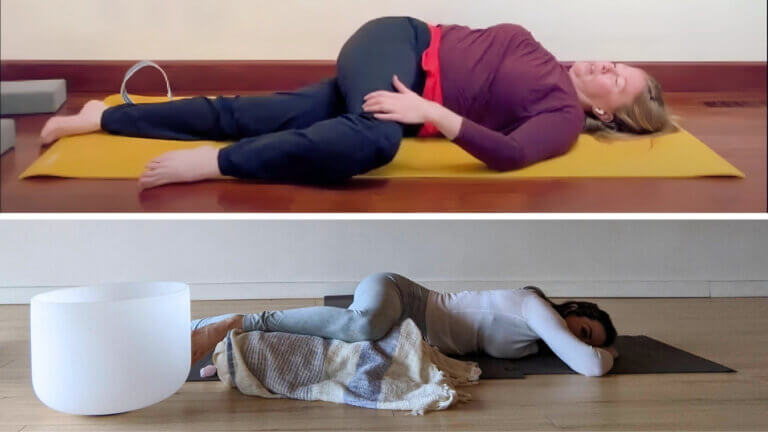
Restorative Yoga vs Yin Yoga: Key Differences Explained
Restorative Yoga vs Yin Yoga
You walk into a slow yoga class expecting gentle stretching and walk out wondering if you just took a nap or actually practiced yoga. Both restorative yoga and Yin yoga look nearly identical from the outside. Props everywhere. Bodies draped over bolsters. Zero sweat. But underneath that stillness, your body is doing completely different work.
One practice is flooding your nervous system with calming signals, while the other is methodically lengthening connective tissue that’s been tight for years. Choose the wrong one for your goal, and you’ll wonder why you’re not getting results.
Most studios use the terms interchangeably, which only adds to the confusion. Yoga Teachers might call a class “restorative” when it’s actually Yin, or blend the two without explaining what’s happening in your body during each pose.
Here’s exactly how these practices differ, what each one does to your body, and which one your nervous system is actually begging for right now.
What Each Practice Actually Does to Your Body
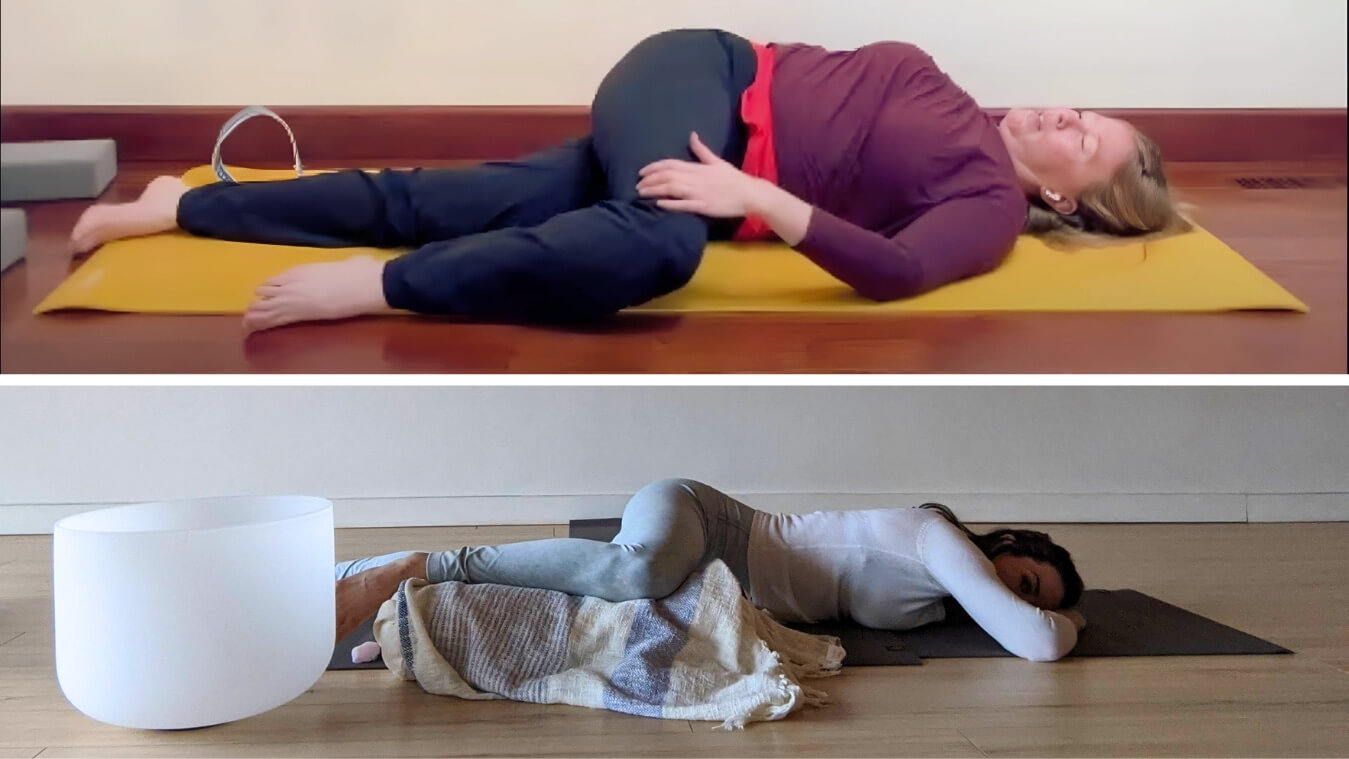
The props fool you into thinking these practices are twins, but your body knows better.
Restorative yoga is pure nervous system work. Every pose is designed to trigger your parasympathetic response, the biological state where your body repairs tissue, digests food, and downregulates stress hormones. You’re using bolsters, blankets, and blocks to fully support your body so your muscles can completely let go. There’s no stretching goal. No edge to find. The entire point is to signal safety to your brain so your body stops running on adrenaline and cortisol.
Yin yoga targets connective tissue, specifically the fascia, ligaments, and tendons that standard yoga flows barely touch. You’re holding passive floor poses for 3 to 5 minutes to apply gentle pressure to these tissues, which respond to sustained pressure by slowly lengthening. Your muscles stay relatively relaxed, but you’re definitely feeling sensation. That dull, achy pull is your fascia releasing and rehydrating. Yin also stimulates energy meridians used in Chinese medicine, which is why many teachers combine it with acupressure theory.
The support level is the clearest tell. In restorative, you should feel like a cloud is holding you—zero effort. In Yin, you’re supported just enough to stay safe, but you’re absolutely feeling the stretch.
Restorative calms your system down. Yin makes your body more mobile. If you’re burnt out, you need restorative. If you’re stiff, you need Yin.
How Long You Hold Each Pose and Why It Matters
The hold time isn’t arbitrary. It’s based on how long specific tissues need to change.
In restorative, longer is almost always better because you’re working with your autonomic nervous system, which needs consistent input over time to believe the threat is gone. In Yin, there’s a sweet spot. Push past five minutes in a deep hip opener, and you might irritate the joint capsule rather than lengthen the fascia.
Beginners often bail out of Yin poses after 2 minutes because the sensation becomes intense. That’s right when the fascia is starting to engage. If you’re leaving poses early, you’re not actually doing Yin. You’re doing an uncomfortable restorative.
Restorative practices teach patience. Yin teaches tolerance. Both require you to sit with discomfort, but the source of that discomfort is completely different.
Props You’ll Use and How They’re Different
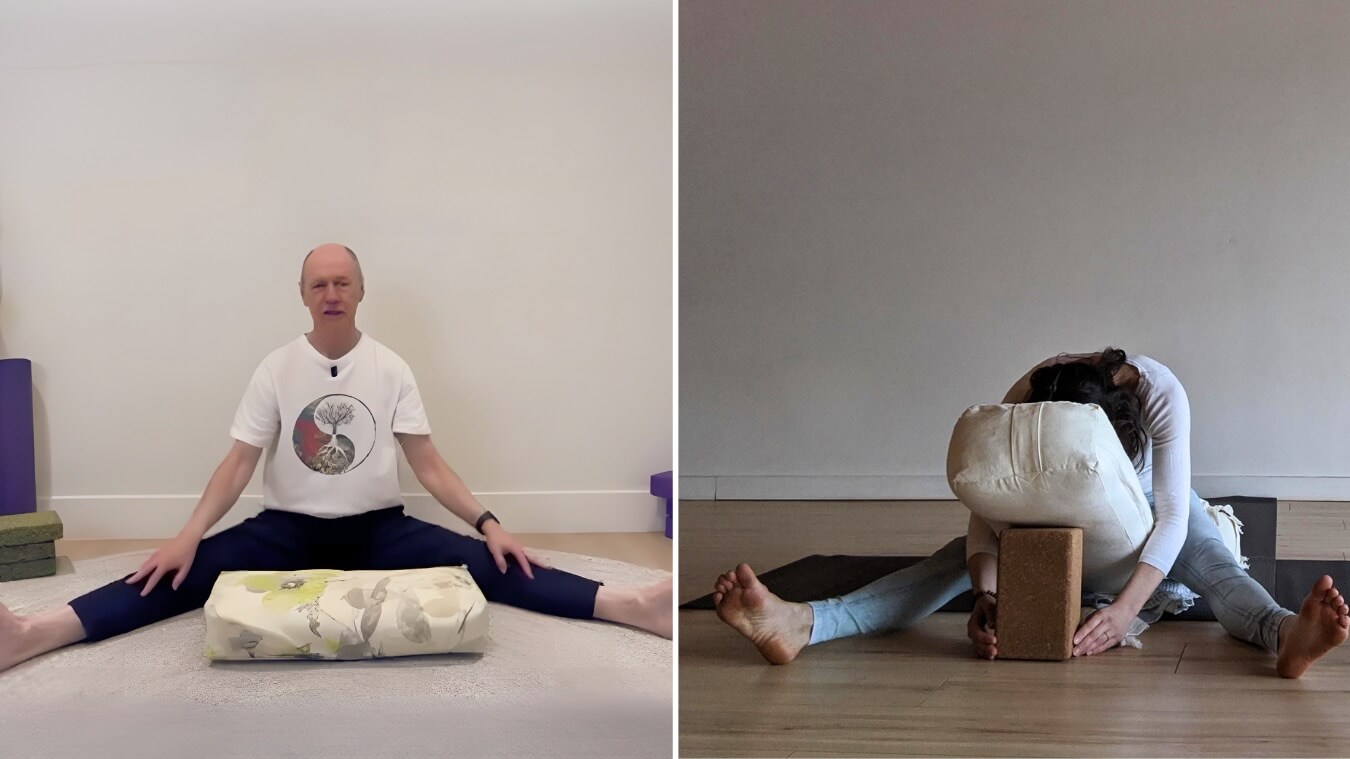
Walk into both classes, and you’ll see the same pile of bolsters, blocks, blankets, and straps. But how you use them separates the practices.
Restorative prop use
The goal is total structural support. If a muscle is working, you need more props.
Yin prop use:
Props in Yin are about finding your edge safely, not eliminating effort. You’re looking for a sustainable stretch you can hold for five minutes, which usually means you need less support than you think.
The difference shows up in the supported child’s pose. In restorative, you’d stack two or three bolsters lengthwise so your entire torso rests without any forward fold. In Yin, you’d use one bolster just high enough to keep your spine neutral while your hips and inner thighs stretch.
Same pose. Completely different setup. Completely different outcome.
The Sensation You Feel During a Yin or Restorative Yoga Class
Feel is where people get confused and think they’re in the wrong class.
What restorative feels like: Calm. Quiet. Sometimes boring. Your body should feel so supported that your mind starts wandering because there’s nothing physical to focus on. You might feel warmth spreading through your chest or belly as your parasympathetic system kicks in. Some people feel emotional. Others fall asleep. If you’re feeling a stretch, something’s wrong with your prop setup.
What Yin feels like: Dull. Achy. Intense but not sharp. You’re sitting in a sensation that slowly builds over three to five minutes. It might feel like pressure, a pulling sensation, or a deep stretch that makes you breathe a little harder. Your mind will beg you to move. That’s normal. The sensation should feel like a 5 or 6 out of 10; never an 8 or 9 if it’s sharp, burning, or electric. Back out immediately.
The mental experience is different, too. Restorative is passive. You’re letting your body rest. Yin is active stillness. You’re choosing to stay in discomfort, which is its own kind of work.
People bail on restorative because it feels like nothing is happening. People bail on Yin because it feels like too much is happening. Both require you to trust the process, but restorative asks you to surrender while Yin asks you to endure.
If you hate sitting still, restorative yoga will torture you. If you’re afraid of intensity, Yin will scare you. Pick based on what your nervous system can handle right now, not what sounds more impressive.
Who Each Practice Is Actually Built For
Your body will tell you which practice it needs if you’re honest about what’s actually wrong.
Restorative yoga is for
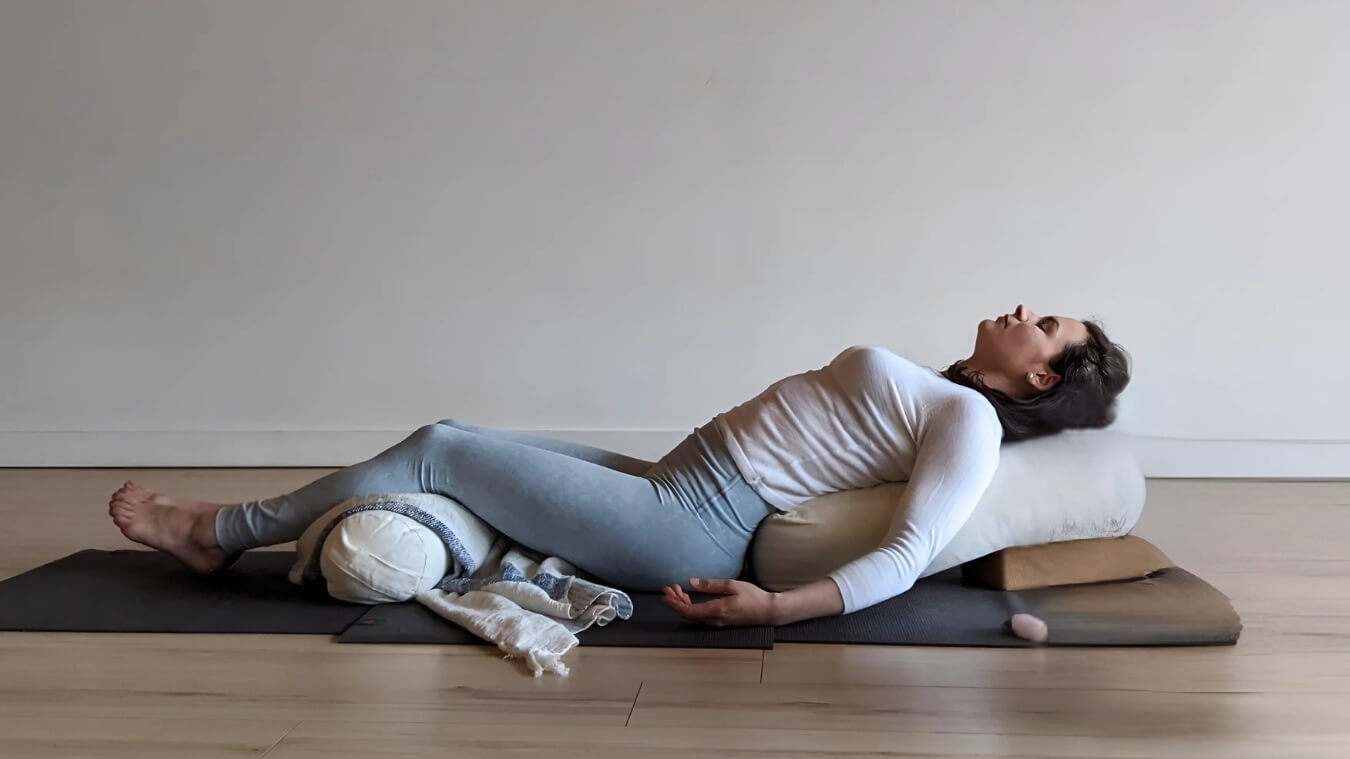
If your body is stuck in survival mode, restorative practices help it repair.
Yin yoga is for
If your fascia is dehydrated and your joints feel stuck, Yin rehydrates and opens tissue that dynamic stretching can’t reach.
The trap is doing the practice you’re already good at. Flexible people love Yin because they can sink deep into poses. Type-A people avoid restorative practices because lying still feels unproductive. But the practice you resist is usually the one you need most.
Restorative fixes burnout. Yin fixes stiffness. If you’re both burnt out and stiff, alternate between them and watch your body change.
What a Typical Yin or Restorative Yoga Class Looks Like
The class structure reveals the difference immediately.
Restorative class breakdown
You’ll spend more time arranging blankets than you will moving. That’s intentional. The setup is part of the practice because it forces you to slow down.
Yin class breakdown
Yin moves faster than restorative, even though you’re still holding poses for several minutes. The transitions are quicker, and the prop setup is simpler.
In restorative, the teacher does the work for you. They’re constantly adjusting your props, checking in, and making sure you’re fully supported. In Yin, the teacher provides the framework, and you take responsibility for your own edge. That difference matters if you need nurturing versus if you need to build self-awareness.
Restorative feels like therapy. Yin feels like meditation with a physical challenge attached.
The Biggest Misconception About Both Practices
People think these are beginner practices because they look easy.
They’re not.
Restorative is advanced nervous system training. Lying still while your brain screams at you to do something productive takes more discipline than holding a handstand. Most people can’t last five minutes in a restorative pose without fidgeting, checking their phone in their head, or bailing because they feel anxious. That’s not a sign the practice is easy. That’s a sign your nervous system is so dysregulated that rest feels dangerous.
Yin is advanced fascial work. Sitting in a hip opener for five minutes while your brain throws every excuse at you to move requires serious mental control. Plus, if you push too hard or collapse into joints, you can hurt yourself. Yin requires body awareness that most beginners don’t yet have.
Both practices are slow, but slow doesn’t mean simple. Stillness is its own skill, and most people are terrible at it because modern life rewards speed and productivity.
If you think these classes are boring, your nervous system is overstimulated. If you think they’re too intense, your body is telling you something you’ve been ignoring.
The people who need these practices most are the ones most likely to dismiss them. Don’t be that person.
Can You Combine Them or Should You Choose One?
You can do both, but not in the same session.
Some teachers blend restorative and Yin practices into one class, diluting the effectiveness of both. Your body can’t simultaneously downregulate your nervous system and stretch fascia. The intentions conflict. Restorative says, “let go completely.” Yin says, “Find your edge and stay there.” Trying to do both at once leaves you in a weird middle zone where you’re neither fully resting nor fully stretching.
The better approach:
Do restorative on high-stress days, after intense workouts, or when you’re feeling anxious or burnt outDo Yin on recovery days, when you’re feeling stiff, or when you want to work on flexibilityAlternate between them weekly or monthly based on what your body needs
If you’re training hard, restorative is your active recovery. If you’re sedentary, Yin is your mobility work. If you’re stressed and tight, pick restorative first because flexibility won’t come until your nervous system feels safe.
The mistake is picking based on what sounds more appealing. Your ego will push you toward Yin because it feels like you’re accomplishing something. Your nervous system is begging for restorative sleep. Listen to your body, not your productivity addiction.
You don’t need to commit to one forever. Your needs change week to week. Pay attention and adjust.
The Verdict: Restorative Yoga vs Yin Yoga, Which Practice Wins?
There’s no universal winner because these practices solve different problems.
Choose restorative yoga if: You’re burnt out, anxious, overtrained, or running on stress hormones. Your body needs to remember what safety feels like before it can heal anything else. Restorative is the reset button your nervous system is begging for.
Choose Yin yoga if: You’re stiff, immobile, or stuck in repetitive movement patterns. Your fascia is dehydrated, and your joints feel locked. Yin gives your connective tissue the sustained tension it needs to lengthen and rehydrate.
For most people dealing with modern life stress, restorative yoga wins. You can’t stretch your way out of nervous system dysregulation, but you can rest your way into better mobility once your body feels safe. Restorative justice lays the foundation. Yin builds on it.
If you’re still not sure, try one class of each and notice how you feel 24 hours later. Restorative should leave you calmer and more grounded. Yin should leave you looser and more open. Your body will tell you which one it needs more of right now.
Both practices are slow, quiet, and prop-heavy, but what they do to your body couldn’t be more different. Stop choosing based on convenience or what your friend recommended. Choose based on whether your nervous system needs calming or your fascia needs lengthening. That’s the only decision that matters.
Practice Yin Yoga with us
Join Bernie Clark and Diana Batts for their weekly live online Yin Yoga Classes, or practice with their recordings. Available in the Welcome to the Yinside Subscription.
Kevin Parenteau
He is a long-time Ashtanga and Yin Yoga Practitioner. Vipassana Meditator, Yoga teacher,
And all-around Yoga Nerd.
Writes on Yoga Asana Practice, Meditation, Chakras, Yoga Education and Philosophy
You Love Yoga, We Love Yoga—Let’s Stay Connected
Get yoga tips, a little inspiration, and friendly emails—because yoga is better with friends.
No spam. No selling your data. Ever.
New On the Yoga Blog
The post Restorative Yoga vs Yin Yoga: Key Differences Explained Written By Kevin Parenteau appeared first on Asana at Home Online Yoga Inc..
Leave a Reply Cancel reply
Recent Comments
Archives
- August 2026
- July 2026
- June 2026
- May 2026
- April 2026
- March 2026
- February 2026
- January 2026
- December 2025
- November 2025
- October 2025
- September 2025
- August 2025
- July 2025
- June 2025
- May 2025
- April 2025
- March 2025
- February 2025
- January 2025
- December 2024
- November 2024
- October 2024
- September 2024
- August 2024
- July 2024
- June 2024
- May 2024
- April 2024
- March 2024
- February 2024
- January 2024
- December 2023
- November 2023
- October 2023
- September 2023
- August 2023
- July 2023
- May 2023
- March 2023
- February 2023
- August 2022
- July 2022
- June 2022
- May 2022
- April 2022
- March 2022
- February 2022
- January 2022
- December 2021
- November 2021
- October 2021
- September 2021
- August 2021
- July 2021
- June 2021
- May 2021
- April 2021
- March 2021
- February 2020
- January 2020
Theme by The WP Club . Proudly powered by WordPress