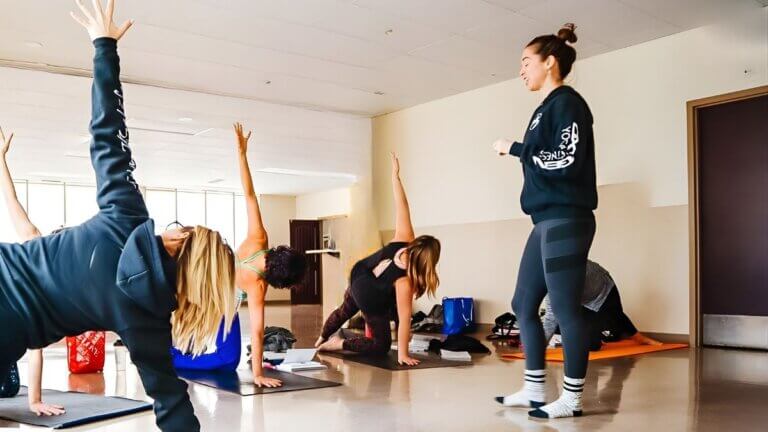
Holding Space in Yoga Teaching | Creating a Safe Container
The Art of Holding Space — Creating a Physical & Emotional Container
In our previous article, Scope of Practice — The Professional Container, we explored how to create a professional container for your teaching in order to serve your students better.
Now we turn to what happens inside that container.
How do we support students and make them feel safe without overstepping boundaries or becoming a savior?
This is where the art of holding space becomes essential.
Key Takeaways
Introduction — A Common Teaching Question
Once that container is in place, a common question arises for many teachers:
How do we support students emotionally without becoming their therapist, counselor, or savior? What should a teacher do when a student is having a strong emotional reaction?
This question shows up frequently in teacher trainings. Yoga classes often bring up strong emotions, personal insights, and vulnerability. When that happens, teachers naturally want to help. But it’s not always clear how to respond in a way that is supportive without overstepping professional and personal boundaries.
This is where the concept of holding space becomes essential.
Why Holding Space Matters for Yoga Teachers
“Holding space” is a phrase often used in yoga communities, but it can feel vague or abstract.
In practice, it’s actually very practical.
Holding space means creating an environment where students feel safe to explore their experience without being judged, controlled, or “fixed.”
After training and evaluating yoga teachers for more than two decades, one thing consistently separates impactful teachers from the rest:
Their ability to hold space.
Most students have felt this difference. In some classes, you feel:
Seen
Accepted
Safe
Supported
In other classes, something feels off. The cues might be technically correct, but the environment doesn’t feel as supportive.
Holding space is often the invisible factor.
It’s also one of the most difficult teaching skills to explain in a teacher training. But once a teacher understands it and begins applying it, their teaching usually shifts powerfully. Students feel the difference immediately.
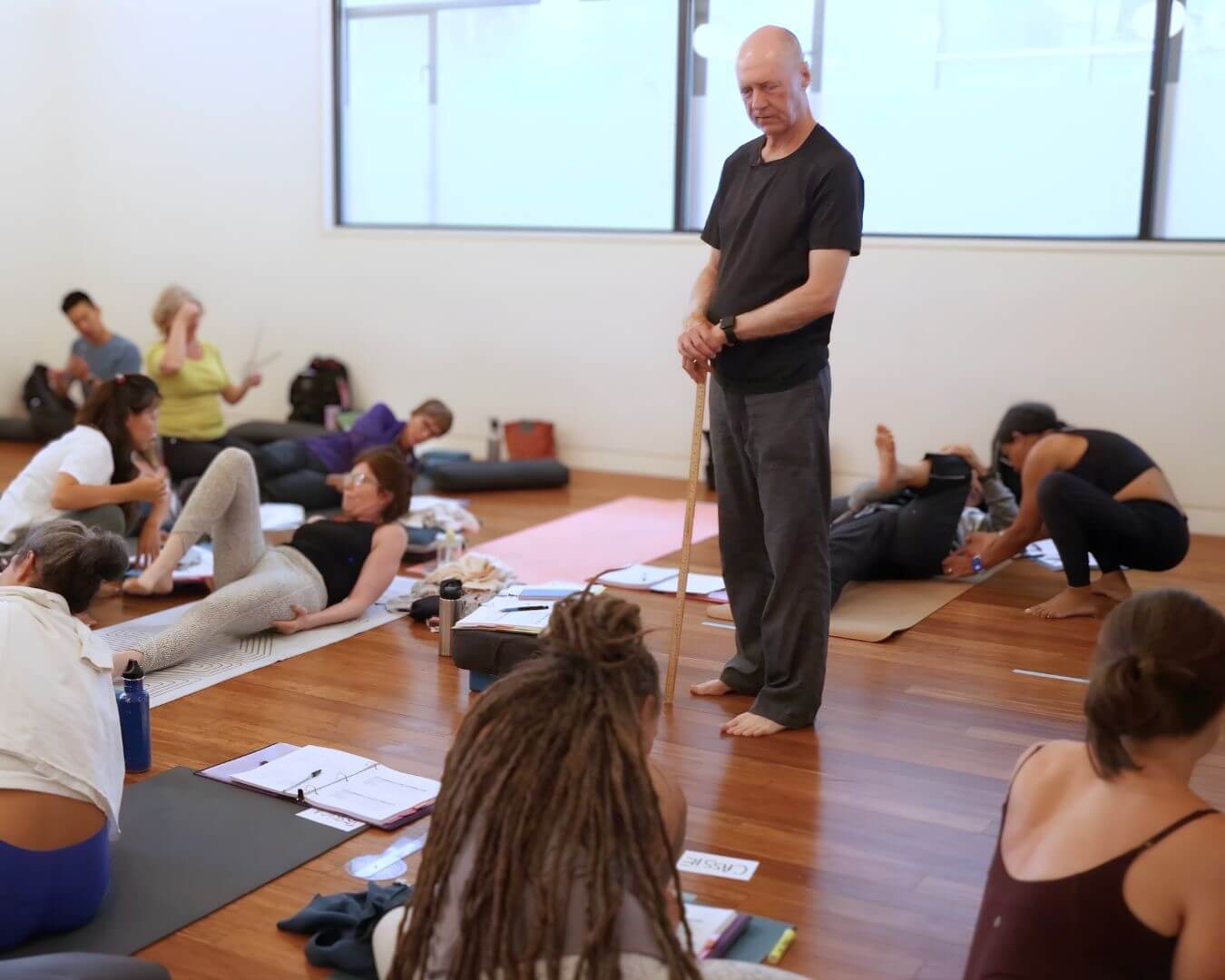
Non-Judgmental Presence
Students are encouraged to have their own experience.
Your role is not to fix them or correct their emotional state. The student is not broken.
Instead, you observe, listen, and offer options that help them explore safely.
Emotional Safety
Yoga practice can bring up many different emotions: frustration, sadness, joy, vulnerability, and many more. None of these experiences are wrong.
Holding space means creating an environment where students feel safe to experience and explore whatever arises.
Empowerment
Rather than positioning yourself as the authority with all the answers, you guide students toward their own internal awareness.
Yoga ultimately teaches discernment and self-trust.
Our role is to support that process, not replace it.
What Holding Space Is Not
One misunderstanding many teachers have is believing that holding space means absorbing the emotional weight of the room.
Over the years I’ve seen teachers become overwhelmed because they feel responsible for everyone’s emotions and they are always trying to ‘fix’ everyone’s problems.
That is not the job.
You are not your students’ therapist, counselor, or emotional caretaker.
Holding space also does not mean abandoning structure or etiquette in class.
A safe container still needs boundaries.
For example, it’s common for students to experience emotional release during practice. Tears sometimes arise.
When that happens, students should feel safe to experience their emotions.
But as a teacher you must still maintain awareness of the entire room. The class cannot become centered around one student’s experience while others are ignored.
Holding space means offering steadiness and non-judgment inside a safe and structured environment.
Preparing Yourself to Hold Space
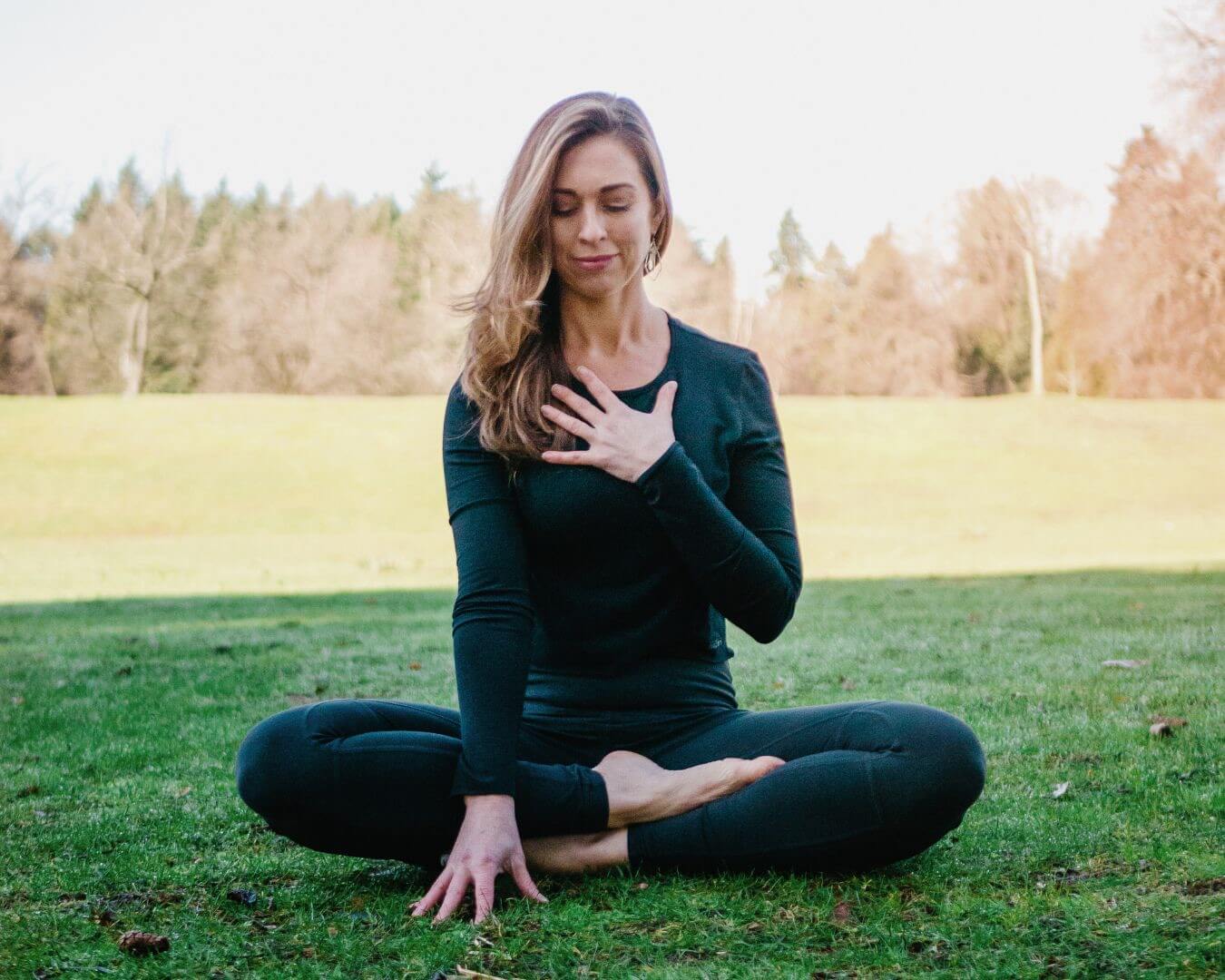
Before we can hold space for students, we need to regulate ourselves.
Students may not consciously recognize it, but they often feel the teacher’s nervous system. The tone of the room frequently reflects the teacher’s internal state.
This is one reason personal practice matters.
Yoga teachers need tools that help them arrive grounded before class begins.
Many teachers develop small rituals that help them shift into teaching mode.
For example, one practice I enjoy is spraying an essential oil blend while taking a few slow breaths, then setting a quiet intention before entering the studio or starting an online class.
This takes less than a minute, but it creates a clear transition.
A simple preparation process might include:
Ground yourself (3 minutes of breathing or OM)Set an intentionEstablish boundaries
These small rituals help teachers stay centered when class dynamics become complex.
Creating a Physical Container
Psychological safety begins with physical safety.
The environment itself plays a role in whether students feel supported.
Some simple elements include:
A clean, uncluttered practice spaceComfortable temperature and ventilationEasy access to propsEncouragement to use modifications
Props are especially important. Regularly encouraging blocks, straps, and blankets helps normalize adaptation and reminds students that practice can meet their individual bodies.
Language Shapes the Container
The words we use strongly influence how safe students feel in class.
When I teach this in the 200hr Yoga Teacher Training program, it can sometimes feel trivial. However, words have power and carry energy.
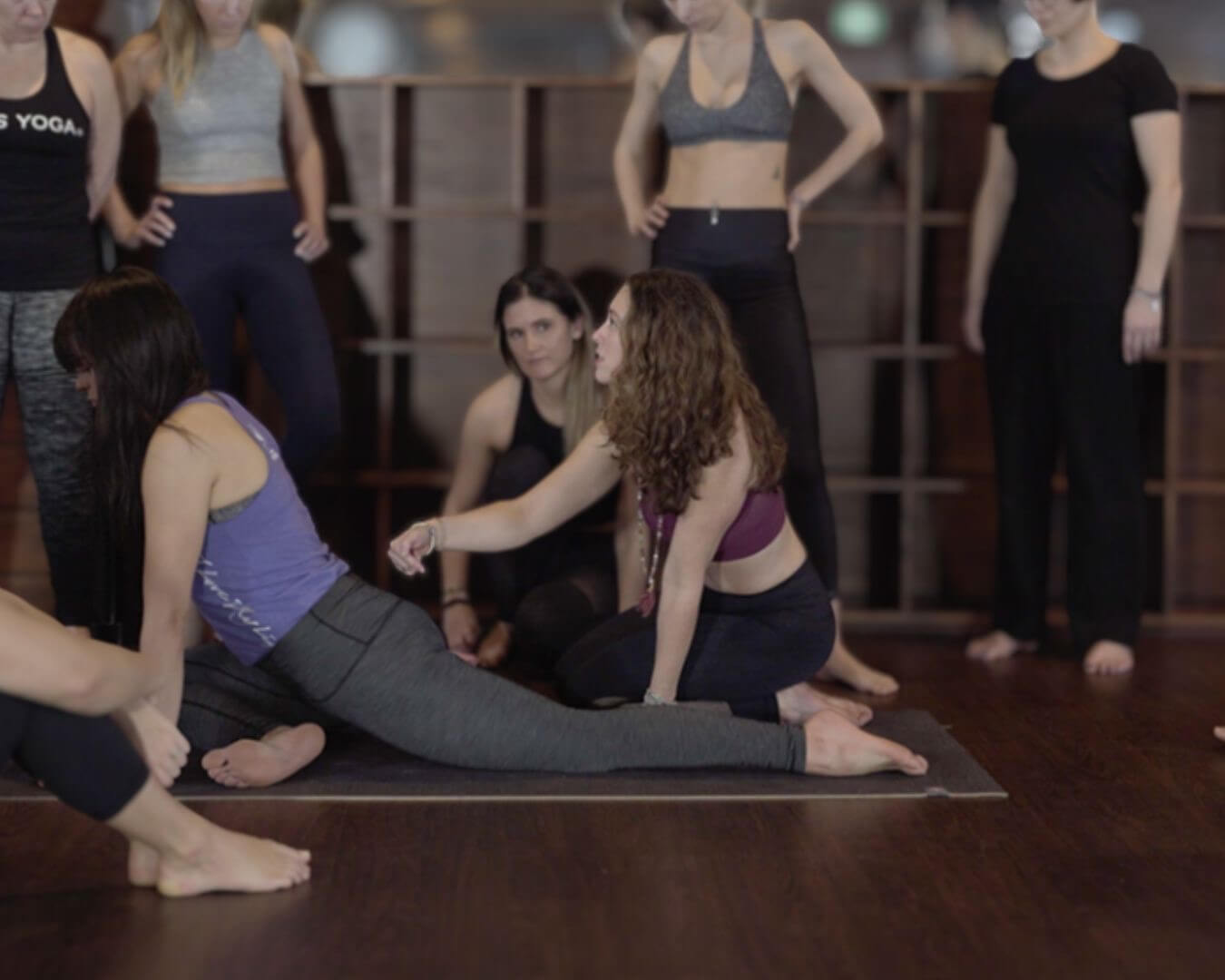
Removing Hierarchical Language
Avoid terms like “advanced” or “level 2.”
Describe experience instead of ranking ability.
Avoiding Minimizing Language
Remove words like “just” that unintentionally dismiss effort.
Permission-Based Language
Use cues like:
“Rest whenever you need.”“Feel free to modify.”
Encouraging Props
Integrate props naturally into cues so they feel normal, not remedial.
Reinforcing Confidentiality
Simple reminders build trust in shared environments.
Non-Verbal Communication Matters Too
Teachers communicate far more than words.
Students read:
facial expressionsposturetonemovement
A calm presence signals safety.
Misalignment between words and internal beliefs shows up quickly — and students feel it.
Supporting Students Without “Fixing” Them
Students often see teachers as authority figures.
That creates responsibility.
If we override their internal signals with rigid instruction, we disconnect them from their intuition.
That’s the opposite of yoga.
Empowering Language in Practice
Instead of commands, use invitations:
“Explore this and notice how it feels.”“Only you know what feels stable.”
Teaching strategies:
Offer optionsAsk questionsDescribe sensationsModel humility
Our role is not obedience.
It is discernment.
A Real Teaching Situation
A student begins crying during class.
You:
Continue guiding calmlyBriefly check inDo not center the class around them
Support without losing the container.
That is holding space.
Self-Regulation Is a Teaching Skill
Triggers happen.
Your job is to remain:
calmclearsteady
This is professional maturity.
Shared Responsibility in the Yoga Room
Students advocate.
Teachers create safety.
We support this by:
referring out when neededstaying in scopeoffering optionsregulating ourselves
Holding space is not having answers.
It is creating conditions for discovery.
Teaching Takeaways
Looking Ahead: Influence Beyond the Mat
In the final article, we explore the teacher’s influence beyond class.
Because what we embody teaches more than what we say.
Refine Your Ability to Hold Space
If you’re ready to deepen your teaching skills and learn how to create safe, effective, and professional class environments, explore our 300-Hour Advanced Yoga Teacher Training, where concepts like holding space, scope of practice, and advanced teaching methodology are developed in depth.
Christina Raskin
You Love Yoga, We Love Yoga—Let’s Stay Connected
Get yoga tips, a little inspiration, and friendly emails—because yoga is better with friends.
No spam. No selling your data. Ever.
The post Holding Space in Yoga Teaching | Creating a Safe Container Written By Christina Raskin appeared first on Asana at Home Online Yoga Inc..
Leave a Reply Cancel reply
Recent Comments
Archives
- September 2026
- August 2026
- July 2026
- June 2026
- May 2026
- April 2026
- March 2026
- February 2026
- January 2026
- December 2025
- November 2025
- October 2025
- September 2025
- August 2025
- July 2025
- June 2025
- May 2025
- April 2025
- March 2025
- February 2025
- January 2025
- December 2024
- November 2024
- October 2024
- September 2024
- August 2024
- July 2024
- June 2024
- May 2024
- April 2024
- March 2024
- February 2024
- January 2024
- December 2023
- November 2023
- October 2023
- September 2023
- August 2023
- July 2023
- May 2023
- March 2023
- February 2023
- August 2022
- July 2022
- June 2022
- May 2022
- April 2022
- March 2022
- February 2022
- January 2022
- December 2021
- November 2021
- October 2021
- September 2021
- August 2021
- July 2021
- June 2021
- May 2021
- April 2021
- March 2021
- February 2020
- January 2020
Theme by The WP Club . Proudly powered by WordPress