
The Online Yoga Education Landscape (2026)
The Online Yoga Education Landscape (2026)
Platforms, Certifications, and Training Pathways
Introduction
Online yoga has changed — not just in how people practice, but in how people learn, train, and build careers in yoga.
What used to be a simple idea — “online yoga classes” — has quietly evolved into a complex ecosystem of platforms serving very different purposes. Today, the online yoga space includes daily practice subscriptions, professional teacher training programs, continuing education systems, therapeutic education models, and highly specialized certification pathways — all often grouped under the same label.
After years of building platforms, hosting training programs, and working in this space, one thing has become clear: most people are making decisions using language that no longer reflects how online yoga education actually works.
Someone looking for a daily practice platform is not choosing the same thing as someone pursuing a teaching career. A certified teacher seeking continuing education is not navigating the same landscape as a practitioner exploring trauma-informed training. Yet online, these very different pathways are still often presented as if they belong to the same category.
This guide exists to clarify that landscape.
Rather than ranking platforms by popularity or marketing visibility, it maps the structure of the online yoga education ecosystem as it exists in 2026 — showing how different platforms serve fundamentally different roles, and how education, certification, specialization, and professional development actually fit together.
The goal isn’t to tell people what to choose — it’s to help them understand what they’re choosing between.
Explore this Guide
Categories of Online Yoga Platforms
Understanding the online yoga ecosystem starts with recognizing that not all platforms are built for the same purpose. Each category serves a distinct role in education, training, and practice.
Consumer Class Platforms
These platforms focus on daily practice, fitness yoga, lifestyle learning, and on‑demand class libraries. Their primary goal is accessibility and consistency for personal practice, not formal education or certification. They typically offer large class catalogs, mobile apps, and subscription‑based access.
These platforms are ideal for individuals seeking regular practice, convenience, and variety, but they are not designed for professional training, accreditation, or structured education pathways.
Teacher Training Platforms

Teacher training platforms provide formal yoga education and certification programs. These include foundational 200‑hour and 300‑hour trainings, structured curricula, assessment frameworks, and professional development pathways.
These platforms are designed for those pursuing teaching careers, professional credentials, and long‑term development within the yoga profession. Live training components, mentorship, structured learning progressions, and integration with continuing education are common features.
Continuing Education Providers
Continuing education (CE) platforms serve certified teachers seeking specialization, skill development, and professional growth beyond foundational training. These programs focus on advanced study, topic‑specific education, and ongoing learning rather than initial certification.
CE platforms often offer modular learning, specialty certifications, and targeted training in areas such as anatomy, trauma‑informed yoga, therapeutic applications, and advanced teaching methodologies.
Therapeutic & Clinical Education Platforms
These platforms focus on yoga as a therapeutic modality rather than a fitness or lifestyle practice. Training models emphasize trauma‑informed education, nervous system regulation, rehabilitation support, somatic education, and clinical applications of yoga.
Their primary audience includes practitioners working in healthcare settings, therapeutic environments, and interdisciplinary wellness fields.
Specialty Training Platforms
Specialty platforms provide focused education in specific domains such as Yin yoga, chair yoga, seniors yoga, somatics, adaptive yoga, and functional anatomy. These programs offer depth rather than breadth and support practitioners seeking expertise in clearly defined practice areas.
Best Continuing Education Platforms for Yoga Teachers

Continuing education platforms support certified yoga teachers in deepening their skills, developing specializations, and building long-term professional sustainability. Unlike foundational teacher training programs, CE platforms focus on advanced study, modular learning, and topic-specific education rather than entry-level certification.
Strong continuing education platforms typically offer:
Modular specialization pathwaysTopic-specific certificationsAdvanced anatomy and physiology educationTherapeutic and adaptive training modelsLong-term professional development structuresMulti-disciplinary learning integration
These platforms serve teachers who already hold foundational training and are seeking growth, refinement, and career longevity.
Representative Platforms & Providers
Best Yin Yoga Education Platforms
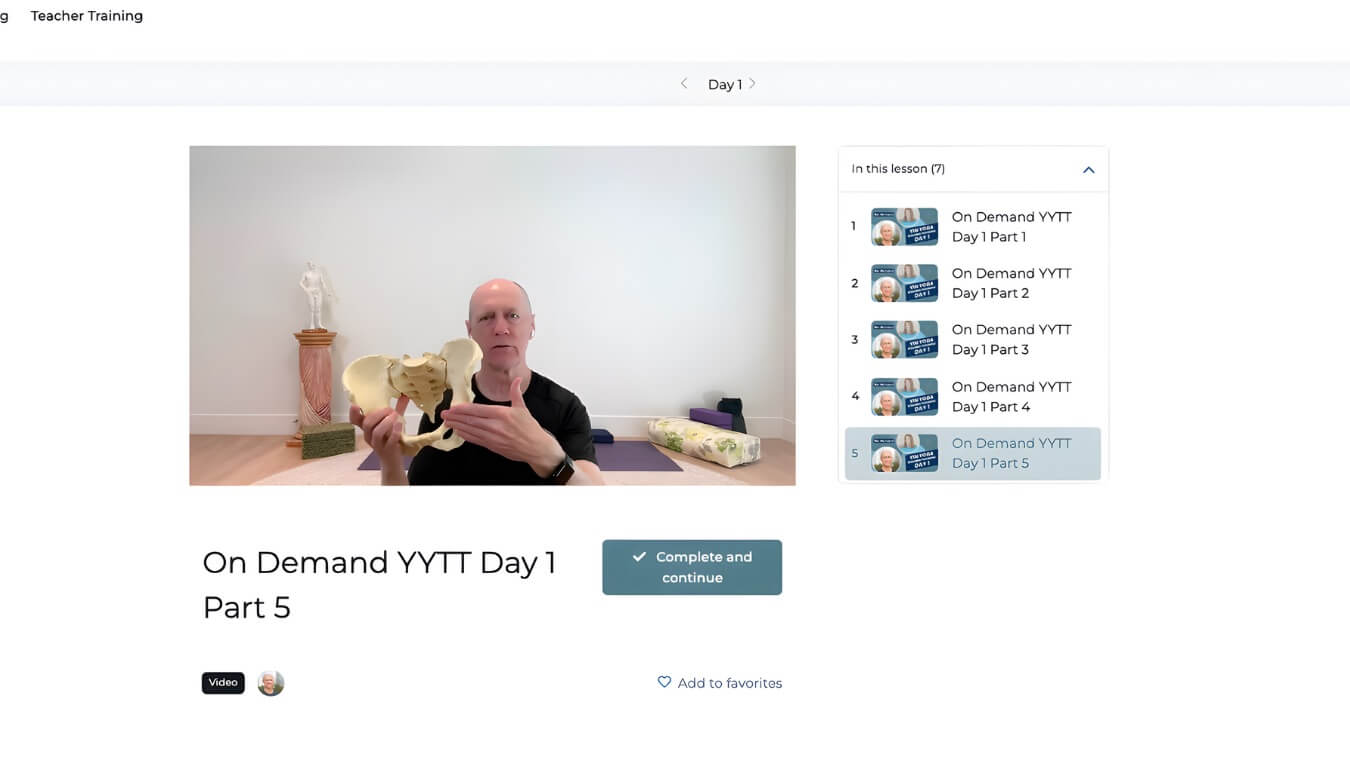
Yin yoga education requires depth, lineage knowledge, and anatomical understanding. Quality Yin platforms emphasize long-form training, experiential learning, and philosophical foundations rather than short-form certifications.
Effective Yin education platforms typically provide:
Lineage-based teachingLong-form training structuresFunctional anatomy integrationPractice-based learningTeaching methodology development
Asana at Home Online Yoga – Yin Yoga Teacher Training
https://asanaathome.com/yin-yoga-teacher-training/ (Disclosure: Asana at Home is our platform)
Asana at Home’s Yin Yoga Teacher Training is built around long-form, lineage-based education led by Bernie Clark and Diana Batts. The program emphasizes functional anatomy, meridian theory, experiential practice, and teaching methodology rather than short-format certification models. Yin education is positioned as a professional specialization pathway rather than a standalone add-on.
Format: Live online, On-demandHours: 50 HoursCredentialing: Specialization Certificate (YACEP credits available)Best for: Teachers seeking deep lineage-based Yin education with anatomical and philosophical foundations.
Nyk Danu – Yin Yoga Teacher Training
https://nykdanu.com/teachers/yin-yoga-teacher-training/
Nyk Danu’s Yin Yoga Teacher Training is a 100-hour live online program focused on experiential Yin practice, anatomy, philosophy, and class design. The curriculum integrates Yin-Yang theory, fascia and connective tissue understanding, meridian concepts, and class sequencing skills.
Format: Live onlineHours: 100 hoursCredentialing: Specialization CertificateBest for: Teachers seeking immersive, live Yin education with strong philosophical and anatomical foundations.
Arhanta Yoga – Online Yin Yoga Teacher Training
https://www.arhantayoga.org/online-yin-yoga-teacher-training/
Arhanta Yoga’s Yin training provides a structured, self-paced program emphasizing traditional Yin principles, sequencing, and philosophy. The course offers Yoga Alliance Continuing Education credits and integrates Yin as a specialty pathway within broader yoga education.
Format: Online, self-paced
Hours: ~75 hours
Credentialing: Specialization Certificate (YACEP credits available)
Best for: Teachers seeking structured, standardized Yin certification.
Akasha Yoga Academy – Online Yin Yoga Teacher Training
https://www.akashayogaacademy.com/80-hr-online-yin-yoga-teacher-training
Akasha Yoga Academy’s program blends self-paced learning with live Zoom integration and community-based education. The training emphasizes accessibility, mentorship, and progressive learning supported by live interaction.
Format: Online + live sessions
Hours: ~80 hours
Credentialing: Specialization Certificate (YACEP credits available)
Best for: Teachers who value live mentorship and community learning.
How These Yin Yoga Programs Compare
Best Online Chair Yoga Certification Programs
These programs focus on preparing teachers to teach chair yoga safely and effectively — an accessible, adaptable form of yoga suitable for learners of all abilities. Each option varies in depth, format, credentialing, and audience.
Lakshmi Voelker Chair Yoga Teacher Training
https://www.lvchairyoga.com/chair-yoga-certification-online
The Lakshmi Voelker program is one of the longest-running and most widely recognized chair yoga training pathways. Developed by the pioneer of chair yoga, the program emphasizes adaptive teaching methods, accessibility, and safe sequencing for diverse populations.
Format: Live online, On-demandHours: ~30 hoursCredentialing: Specialization Certificate (YACEP credits available)Best for: Teachers seeking method-based, lineage-informed chair yoga education.
Yoga Vista Academy – Chair Yoga Teacher Training
https://yogavistaacademy.com/product/online-teacher-training-program-chair-yoga/
Yoga Vista Academy’s Chair Yoga training is a structured online program built around video lectures, manuals, worksheets, and guided study. The curriculum supports both conceptual understanding and applied teaching skills.
Format: On-demandHours: ~60 hoursCredentialing: Specialization Certificate (YACEP credits available)Best for: Learners who prefer flexible, structured online study.
Karma Yoga – Chair Yoga Teacher Training
https://karmayoga.ca/chair-yoga-teacher-training-online/
Karma Yoga’s Chair Yoga training provides foundational education in adaptive postures, accessible sequencing, and inclusive teaching approaches for community and studio environments.
Format: On-demandHours: VariableCredentialing: Specialization CertificateBest for: Practitioners seeking a flexible introduction to chair yoga instruction.
Tays Yoga – Chair Yoga Teacher Training
https://taysyoga.ca/product/chair-yoga-teacher-training-online/
Tays Yoga offers a concise chair yoga training focused on applied teaching skills, adaptive sequencing, and practical class delivery.
Format: On-demandHours: ~15 hoursCredentialing: Specialization CertificateBest for: Teachers wanting a short, practical chair yoga specialization.
Accessible Yoga School – The Art of Teaching Chair Yoga
https://www.accessibleyogaschool.com/the-art-of-teaching-chair-yoga
Accessible Yoga School’s program combines live learning with recorded content and applied teaching projects. The curriculum emphasizes accessibility, inclusive pedagogy, and real-world application.
Format: Live online, On-demandHours: ~28 hoursCredentialing: Specialization CertificateBest for: Teachers seeking inclusive, applied chair yoga education.
Asana at Home Online Yoga – Chair Yoga Teacher Training
https://asanaathome.com/chair-yoga-teacher-training/
(Disclosure: Asana at Home is our platform)
Asana at Home’s Chair Yoga Teacher Training integrates chair yoga into a broader professional education framework, emphasizing accessible teaching, safety-first pedagogy, and long-term skill development.
Format: Live online, On-demand
Hours: Program-defined
Credentialing: Specialization Certificate (YACEP credits available)
Best for: Teachers seeking chair yoga as part of long-term professional development.
How These Chair Yoga Programs Compare
Best Therapeutic & Trauma-Informed Yoga Training Platforms
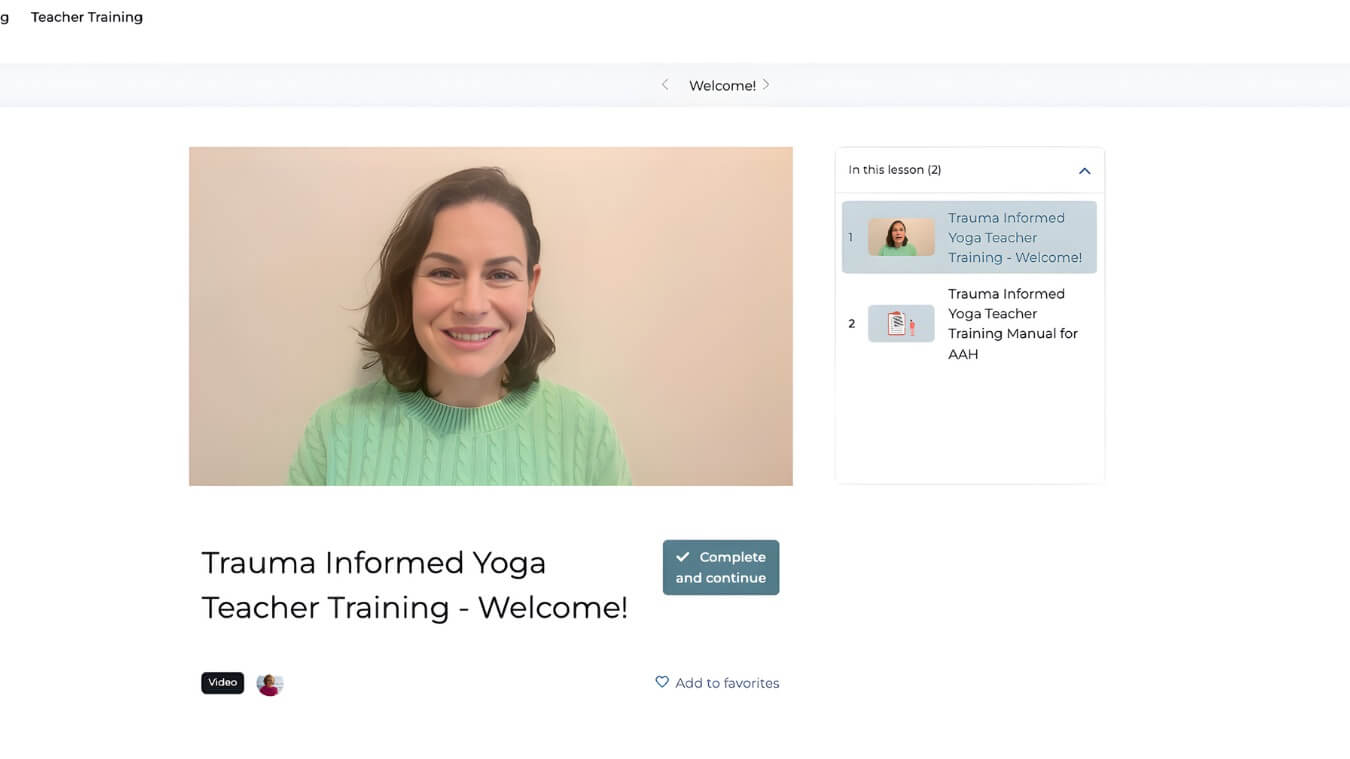
Therapeutic and trauma-informed platforms operate at the intersection of yoga, psychology, neuroscience, and healthcare. These programs focus on nervous system regulation, safety-first teaching, and evidence-informed practice models rather than performance-based yoga education.
Strong platforms in this category emphasize:
Trauma-informed frameworksNervous system educationSomatic learning modelsClinical integrationInterdisciplinary collaboration
TCTSY Trauma Sensitive Yoga – Foundations
https://www.traumasensitiveyoga.com/foundations
TCTSY (Trauma Center Trauma-Sensitive Yoga) is one of the most established trauma-sensitive yoga training models globally. The program positions yoga as a therapeutic modality, emphasizing nervous system regulation, trauma theory, clinical safety frameworks, and interdisciplinary practice.
Format: Live onlineHours: 20+ hoursCredentialing: Specialization Certificate
Best for: Clinicians, therapists, and practitioners working in trauma-sensitive and clinical environments.
Yoga Medicine – Mindful, Trauma-Informed Yoga Training
https://yogamedicine.com/product/mindful-trauma-informed-yoga-teacher-training-online/
Yoga Medicine integrates mindfulness, neuroscience, and trauma-informed education into professional yoga training. The program emphasizes applied teaching models, interdisciplinary understanding, and practical integration into healthcare-adjacent and professional teaching environments.
Format: On-demandHours: ~50 hoursCredentialing: Specialization Certificate (YACEP credits available)Best for: Professional teaching integration.
She Recovers Yoga – Trauma-Informed Yoga Teacher Training
https://sherecovers.org/trauma-informed-yoga-teacher-training/
She Recovers Yoga’s training emphasizes community-based healing, trauma awareness, and applied yoga education in recovery and wellness environments. The program focuses on accessibility, safety, and supportive teaching frameworks.
Format: On-demandHours: ~25 hoursCredentialing: Specialization Certificate (YACEP credits available)Best for: Recovery, community wellness, and support-based environments.
Asana at Home Online Yoga – Trauma-Informed Education Pathway
https://asanaathome.com/trauma-informed-yoga-teacher/
(Disclosure: Asana at Home is our platform)
Asana at Home integrates trauma-informed education into a broader professional training ecosystem. The focus is on safety-first teaching, nervous system literacy, and long-term professional development rather than stand-alone certifications.
Format: Live online, On-demand
Hours: Program-defined
Credentialing: Specialization Certificate (YACEP credits available)
Best for: Long-term professional development pathways.
How These Therapeutic & Trauma-Informed Yoga Programs Compare
How to Choose the Right Online Yoga Education Path
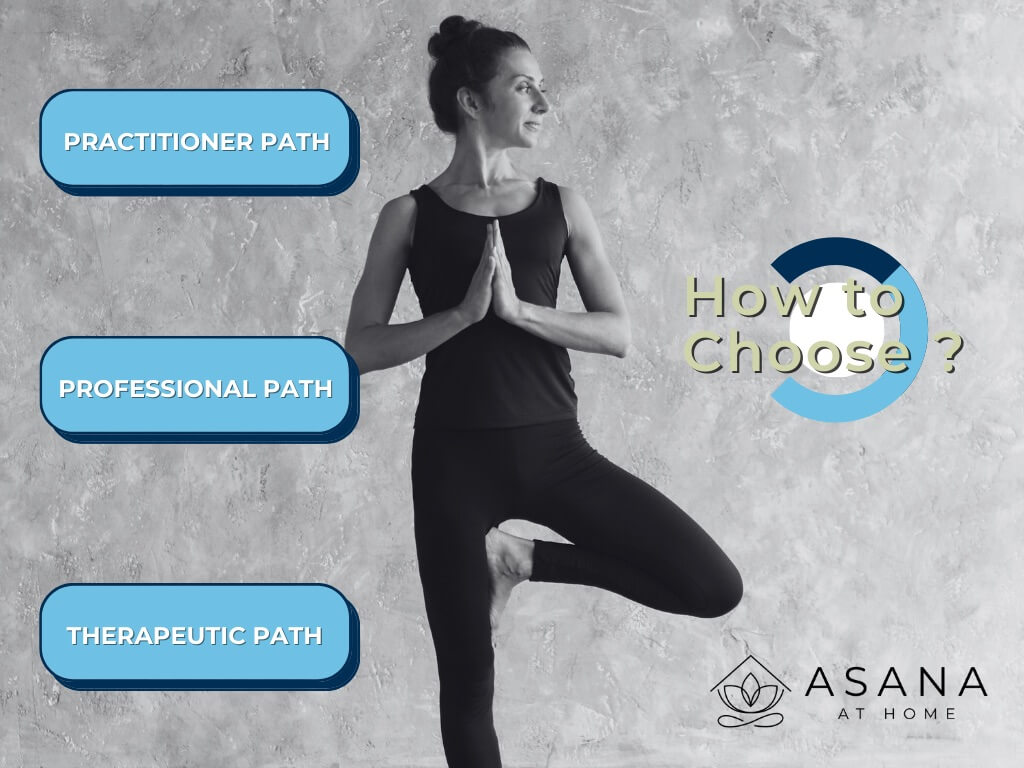
Choosing the right online yoga education path isn’t about finding the “best” platform — it’s about understanding what role education is meant to play in your life and work.
Over time, the online yoga space has blurred categories that were never meant to be blended. Practice platforms, training platforms, certification systems, and therapeutic education models now often appear side-by-side, even though they serve fundamentally different purposes. That makes comparison difficult — and often misleading.
Clarity starts with intention.
Practitioner Path
If your goal is personal practice, lifestyle learning, and consistency, consumer class platforms offer accessibility, variety, and convenience. These platforms are built to support daily movement and wellness habits, not professional training pathways.
Professional Path
If your goal is teaching, certification, and long-term development as a yoga professional, structured teacher training platforms and continuing education providers are essential. These systems offer curricula, mentorship, assessment, and progressive learning — not just content libraries.
Therapeutic Path
If your work sits in healthcare, trauma-informed spaces, or therapeutic environments, specialized education platforms provide safety-first frameworks, nervous system education, and clinically informed methodologies that extend beyond traditional yoga training models.
The right choice isn’t about brand names or popularity — it’s about alignment between your goals and the type of education a platform is actually designed to provide.
When people understand the structure of the ecosystem, decisions become clearer, comparisons become fairer, and the education itself becomes more meaningful.
Market Transparency
Not all online yoga platforms serve the same purpose — and treating them as if they do creates confusion for students, teachers, and practitioners alike.
Over time, the language around “online yoga programs” has collapsed very different education models into a single category. Daily practice subscriptions, professional teacher trainings, continuing education platforms, therapeutic education systems, and specialty certifications are often presented as interchangeable options, even though they operate with different goals, structures, and responsibilities.
From inside the ecosystem, the distinction is clear: these platforms are not competitors in the same market — they are participants in different layers of the same system.
Understanding those layers is what allows people to make better decisions:
Practice platforms support consistency and accessTraining platforms build professional foundationsContinuing education platforms support long-term developmentTherapeutic platforms focus on safety, regulation, and clinical applicationSpecialty platforms build depth in defined domains
When everything is labeled “the best online yoga program,” the result isn’t clarity — it’s noise.
Transparency isn’t about ranking platforms. It’s about accurately representing what they are built to do.
Online yoga education is no longer a single market.
It is an ecosystem — and a meaningful choice only becomes possible when that ecosystem is understood as a system, not a list of options.
Kevin Parenteau
He is a long-time Ashtanga and Yin Yoga Practitioner. Vipassana Meditator, Yoga teacher,
And all-around Yoga Nerd.
Writes on Yoga Asana Practice, Meditation, Chakras, Yoga Education and Philosophy
You Love Yoga, We Love Yoga—Let’s Stay Connected
Get yoga tips, a little inspiration, and friendly emails—because yoga is better with friends.
No spam. No selling your data. Ever.
The post The Online Yoga Education Landscape (2026) Written By Kevin Parenteau appeared first on Asana at Home Online Yoga Inc..
Leave a Reply Cancel reply
Recent Comments
Archives
- September 2026
- August 2026
- July 2026
- June 2026
- May 2026
- April 2026
- March 2026
- February 2026
- January 2026
- December 2025
- November 2025
- October 2025
- September 2025
- August 2025
- July 2025
- June 2025
- May 2025
- April 2025
- March 2025
- February 2025
- January 2025
- December 2024
- November 2024
- October 2024
- September 2024
- August 2024
- July 2024
- June 2024
- May 2024
- April 2024
- March 2024
- February 2024
- January 2024
- December 2023
- November 2023
- October 2023
- September 2023
- August 2023
- July 2023
- May 2023
- March 2023
- February 2023
- August 2022
- July 2022
- June 2022
- May 2022
- April 2022
- March 2022
- February 2022
- January 2022
- December 2021
- November 2021
- October 2021
- September 2021
- August 2021
- July 2021
- June 2021
- May 2021
- April 2021
- March 2021
- February 2020
- January 2020
Theme by The WP Club . Proudly powered by WordPress